
news · 7 min
Eighteen Million Acres, and the Eight That Are Not Safe
The Florida Wildlife Corridor was drawn to keep the state's wild spine connected from the Everglades to Georgia. Five years in, the map is done and the money is the story.
By The Editors ·
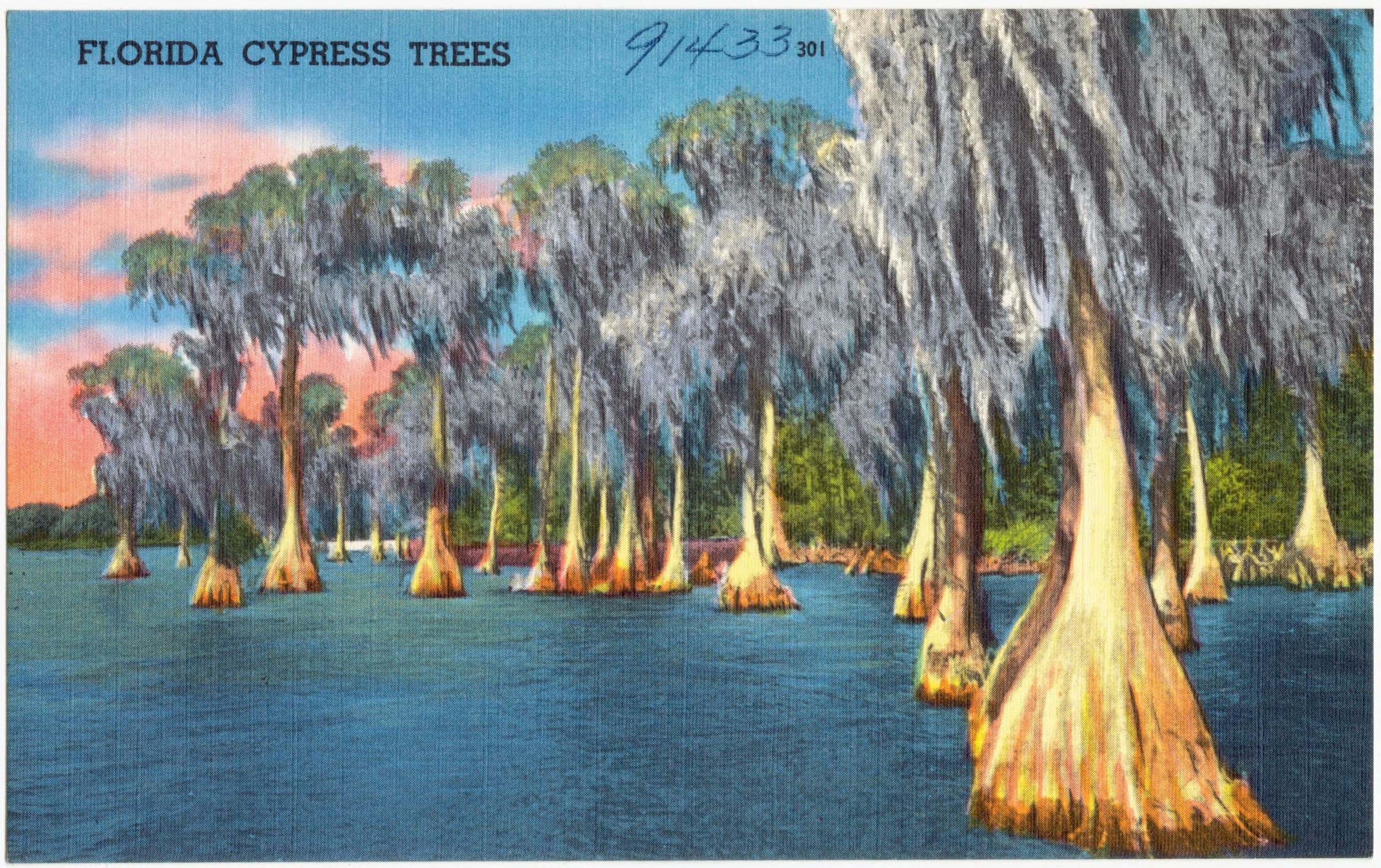
Lay a map of Florida's public lands on a table and the state looks like an archipelago. The Everglades and Big Cypress at the bottom. The Ocala and Osceola national forests up top. Between them a scatter of state forests, water management lands, military ranges, and preserves, each one an island. What connects the islands is private land, most of it cattle ranch, citrus grove, and timber, and a panther or a bear crossing from one to the next does it through somebody's pasture.
The Florida Wildlife Corridor is the name for that whole system, islands and pastures together. It runs about 18 million acres from the Everglades to the Georgia and Alabama lines. Ten million of those acres are already conservation land. The other eight million are the working lands in between, and they are the corridor's weak points, because every one of them can be sold and built on.
A Line Drawn on Foot
The idea was mapped by scientists before it was a law, but it became a public cause because a photographer walked it. In 2012 Carlton Ward Jr., an eighth generation Floridian from a ranching family, set out with a small team from the Everglades and traveled about a thousand miles north to the Okefenokee Swamp over a hundred days, by foot, paddle, and horse, to show that the route still existed and to photograph what was on it. A second expedition in 2015 went west across the Panhandle. The pictures, of panthers and cattle and cypress and the people who ran the ranches, gave a technical planning concept a face.
The law came in 2021. Senate Bill 976, the Florida Wildlife Corridor Act, passed both chambers without a vote against it and was signed at the end of June, with a celebration at the Disney Wilderness Preserve outside Kissimmee that July. The Act does not seize anything or zone anything. It defines the corridor on the map and tells the state to spend its conservation money there first. The first budget backed it with $300 million, on top of $100 million for Florida Forever, the state's long running land buying program.
By the state's count, more than 470,000 acres inside the corridor have been approved for protection since. In March 2025 the Governor and Cabinet put $84.9 million toward 19,486 acres across seven properties. The last Cabinet meeting of 2025 added about 21,500 more. The Rural and Family Lands Protection Program, which pays ranchers to keep ranching under a conservation easement, drew 510 applications this year covering more than 600,000 acres, 65 percent of them inside the corridor, and it has $425 million to work with, the most it has ever had.
What an Easement Buys
Most of that protection is not a park. It is a deed restriction. Under a conservation easement the rancher keeps the land, keeps the cattle, keeps the mineral rights and the hunting, and gives up, permanently and for a payment, the right to subdivide it. The state gets the corridor without buying the ranch, and the ranch stays on the tax roll and in the family. For a fourth generation cattle operation with a developer at the gate, an easement can be the difference between a fifth generation and a closing date.
Susan Carr, who runs conservation projects for the Putnam Land Conservancy, has made the case for easements as plainly as anyone, and has also warned what they cannot do. A landowner under real development pressure usually sells outright rather than easementing. Some land has to be publicly owned to be restored. And a corridor assembled from fragments needs the power to buy the missing pieces. When the Senate proposed this spring that Florida Forever be limited to easements only, no fee purchases, she called it a fundamental policy shift that removes a critical conservation tool.
Florida Forever was funded at $229 million in 2024. The next year it got $18 million. This year, nothing new.
The Money
Florida Forever has spent as much as $300 million a year in its stronger seasons. The 2024 to 2025 budget gave it $229 million. The budget that followed gave it $18 million, and lawmakers tried to pull $200 million back out of the corridor account until the Governor vetoed the clawback in July 2025. In the 2026 session the House proposed zero for Florida Forever and the Senate $35 million, and the session ended with no new appropriation at all. The program is running this year on $162 million carried over from before.
That is happening while land has never been more expensive to save. Farmland prices in Florida have risen roughly five times since 2019, and a citrus grove that can be rezoned, which describes much of the corridor's central spine, has gone up about ten. Since 2021 the state has lost roughly 50,000 acres of corridor land to development. Planners expect about a fifth of the unprotected opportunity area to be built on by 2050 at the current pace, with ten counties in the crosshairs: Citrus, Collier, Hernando, Osceola, Marion, Polk, Lake, Leon, Orange, and Volusia. To hold the line, the state would need to protect around 120,000 acres a year. Landowners are lining up to sell easements faster than the money can meet them.
Some of the gap is being filled privately. In Polk County a software founder named Arnie Bellini bought Eagle Haven Ranch, 2,317 acres, for $17.5 million, and put 639 acres of it into a public preserve. The ranch earns about $60,000 a year maintaining floodplain for the district. It is a good story and a small one against eight million acres.
What a Corridor Looks Like
On the ground the Florida Wildlife Corridor is not a green stripe. It is a cattle gate left open at night on the Kissimmee prairie. It is a wildlife underpass under State Road 80 with a panther's tracks in the mud. It is the western anchor at the Chassahowitzka refuge, 31,000 acres of salt marsh where the bears come down to the coast. It is a citrus grove in Highlands County that is still a grove this year, because the family that owns it took an easement payment instead of a subdivision offer.
Whether it stays that way is a question about money, not about maps. The map is drawn and has been since 2021. Every grove that comes out of the state's citrus inventory, and 42,827 acres came out this year alone, is an acre that was either protected first or sold first, and the difference between those two is a line item. Florida knows how to build a corridor. This year it chose not to pay for one.