
news · 17 min
The State of the Orange
Florida citrus went from six million boxes to 244 million and back to thirteen. A long look at how the groves were built, what took them apart, and what it would take to keep the rest.
By The Editors ·
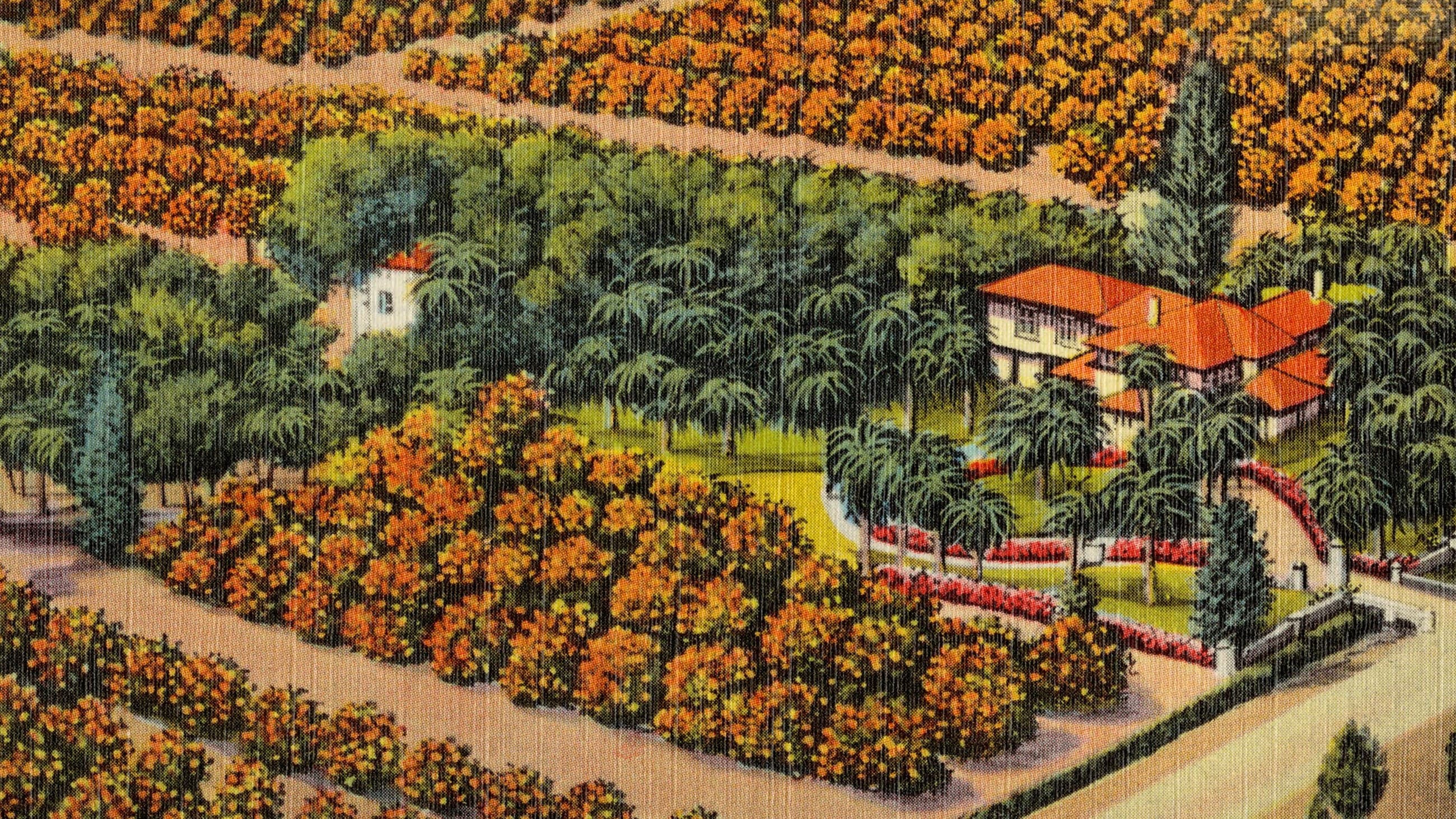
Around 1830 a planter named Douglas Dummett left his family's sugar plantation on the Tomoka River for the north end of Merritt Island, on the lagoon that would later be sold to the world as the Indian River. He found wild sour orange trees already growing there, and he did something with them that the other growers had not thought to do. He budded sweet orange onto the sour orange stock several feet above the ground, so the graft sat high in the air where a frost that settled along the soil could not reach it. In February 1835 a freeze came down the peninsula that partly froze the St. Johns River and killed the citrus in Georgia and the Carolinas for good. Dummett's trees lived. His fruit went north at a premium of a dollar a box, and the Indian River name has been on the best Florida oranges ever since.
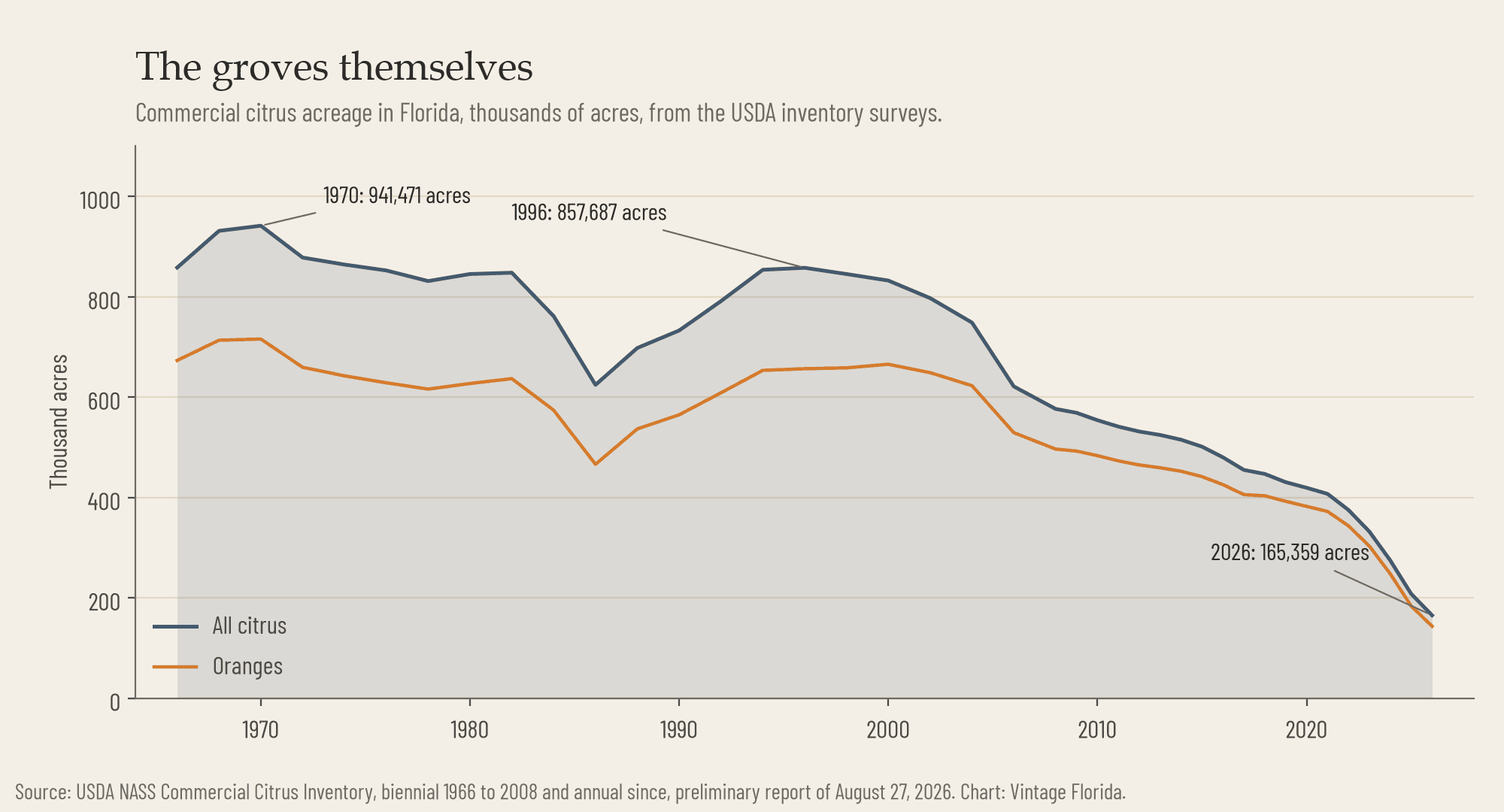
That story is worth starting with because it has the shape of everything that came after. Florida citrus has always been a fight between a crop that wants to be somewhere warmer and a state that keeps finding new ways to lose it. The industry that grew out of Dummett's island reached 244 million boxes of oranges in the 1997-98 season, on more than 800,000 acres. In the season that ended this summer it picked 12.9 million boxes, and the annual inventory taken in August counted 165,359 acres of citrus of all kinds, a fifth less than the year before. This is a long article, because the answer to what happened is not one thing, and the answer to what to do about it is not one thing either.
How It Began
Oranges are not native to Florida. The Spanish brought them, sometime between the first landings in 1513 and the founding of St. Augustine in 1565, and the trees escaped. Seeds spread along the rivers, carried by people and animals, and by the time American settlers arrived there were wild sour orange groves along the St. Johns that nobody had planted. The commercial trade was a creature of the 1870s and 1880s. Steamboats worked more than 400 miles of Florida rivers by the middle of the 1880s, and fruit from the groves along the St. Johns and the Indian River went by water to Jacksonville and then north by rail. Henry Flagler bought his first Florida railroad on the last day of 1885, and Henry Plant built his lines down the west side of the state, and together they gave the interior what it had never had, a cheap way to get a perishable crop to a northern city before it spoiled. By 1893 Florida was shipping about five million boxes a year.
The varieties that would carry the next century were already in the ground. The Parson Brown was a chance seedling from the yard of a minister near Webster, planted in 1856 and named by the nurseryman who bought the rights to it about 1875. The Hamlin was another seedling, from a grove near Glenwood planted in 1879. The Valencia took the long way around. An English nurseryman named Thomas Rivers imported it from the Azores and listed it in 1865, sent trees to a Long Island nursery, which sold them to E. H. Hart of Federal Point on the St. Johns, where in 1877 it was named Hart's Tardiff for how late it ripened. California grew the same tree under the name Valencia Late, and when the two proved identical the shorter name won. Most of the juice oranges Florida grows today are still Hamlins and Valencias.
The Freeze That Moved a State
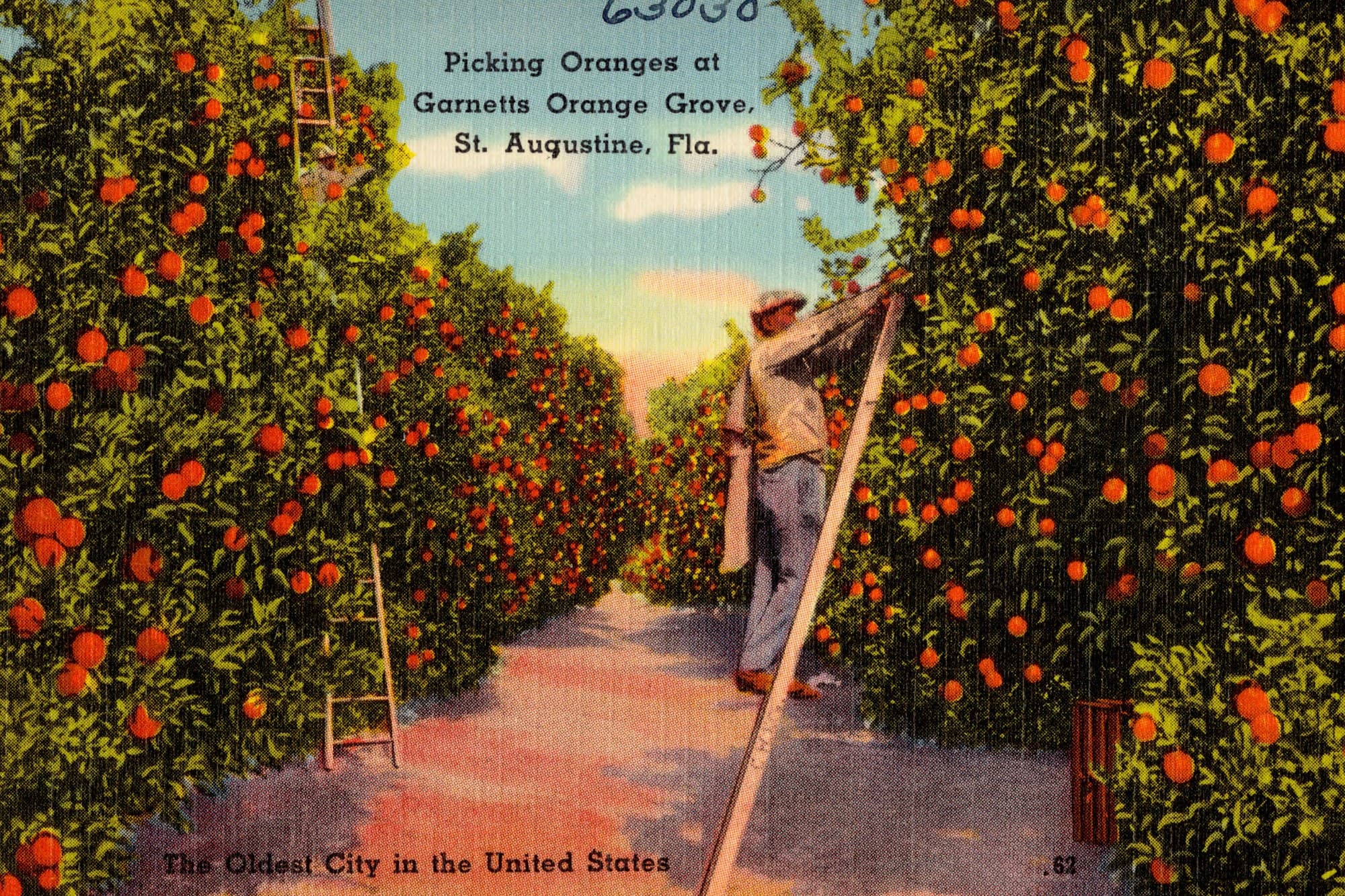
In the last days of December 1894 the temperature in Orlando fell to 18 degrees. The fruit froze on the trees. The trees themselves mostly lived, and a warm January brought them into full new growth, so that when a second freeze arrived in the second week of February and the thermometer touched 19, the sap was up and the trees split. Lake County lost 99 percent of its trees. The state had shipped somewhere between five and six million boxes the season before. The next season it shipped a fraction of that, and by the most commonly cited account the crop did not pass a million boxes again until 1901. The state's own historical account says production did not get back to its 1894 level until 1909. Another hard freeze in February 1899, when Tallahassee recorded two below zero, finished what was left of the northern groves.
The industry did not die. It moved. The growers who replanted went south, onto the sandy ridge that runs down the middle of the peninsula through Polk and Highlands counties, and to the lake country around Orlando where the water moderated the cold. In DeLand a Chinese immigrant named Lue Gim Gong, who had come to Florida in 1886, spent the years after the freezes crossing varieties for hardiness and late ripening, and in 1911 the American Pomological Society gave him its Wilder silver medal for the orange that carries his name. He is a fair emblem of what the Great Freeze did to Florida citrus. It made breeding, rootstock, and site selection into matters of survival, and it taught the state that the crop could be lost all at once.
Building an Industry
The institutions that still run Florida citrus were built between the freeze and the Second World War. In 1917 the legislature authorized a Citrus Experiment Station at Lake Alfred, in Polk County, to be paid for by the growers themselves, on 84 acres bought for $5,900. It is now the University of Florida's Citrus Research and Education Center and describes itself as the largest facility in the world devoted to a single crop. In 1929 the Mediterranean fruit fly turned up in the groves and was eradicated within about a year at a cost of some $7.5 million. In 1935, in the middle of the Depression, the legislature passed the Florida Citrus Code, created the Florida Citrus Commission, and gave it a tax on every box to pay for advertising. The commission is still there, still appointed by the governor, and its box tax still funds the Florida Department of Citrus. Florida Citrus Mutual, the growers' trade association, began operating in 1948.
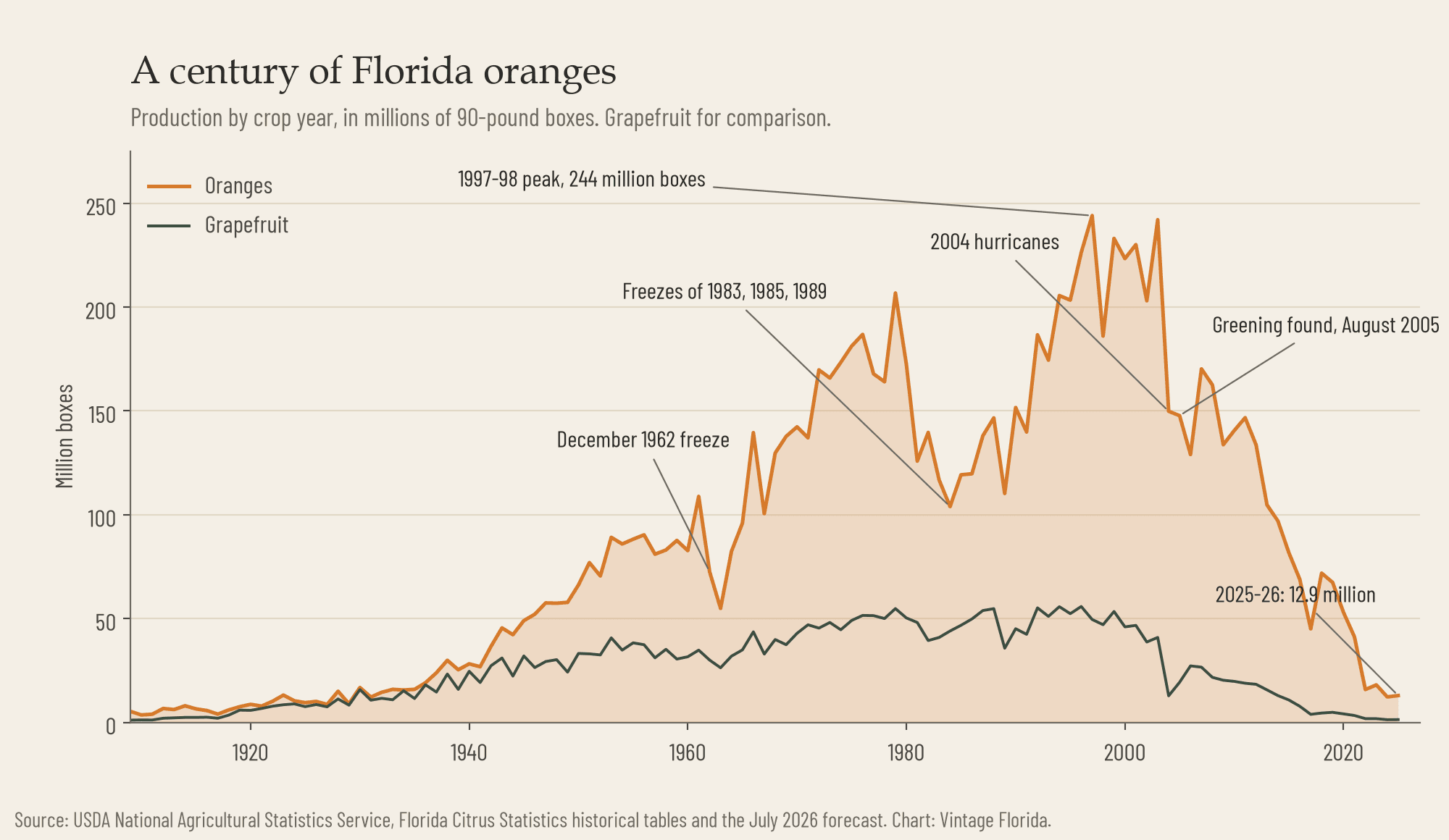
What the chart shows is a crop that grew for ninety years despite everything. Frozen concentrate, worked out in a federal laboratory in Winter Haven in 1945, turned orange juice into a staple and gave growers a reason to plant far more trees than the fresh market could ever absorb. By the 1950s the state was picking better than 80 million boxes of oranges a year. The freeze of December 1962, eight hours below freezing across the belt, cut the following crop by a third and did more damage to trees than any other freeze of the century to that point, and production was back above the old level by the 1966-67 season. The acreage kept climbing. The USDA's first aerial inventory in 1966 counted 858,082 acres of commercial citrus. In 1970 it counted 941,471, the most there has ever been.
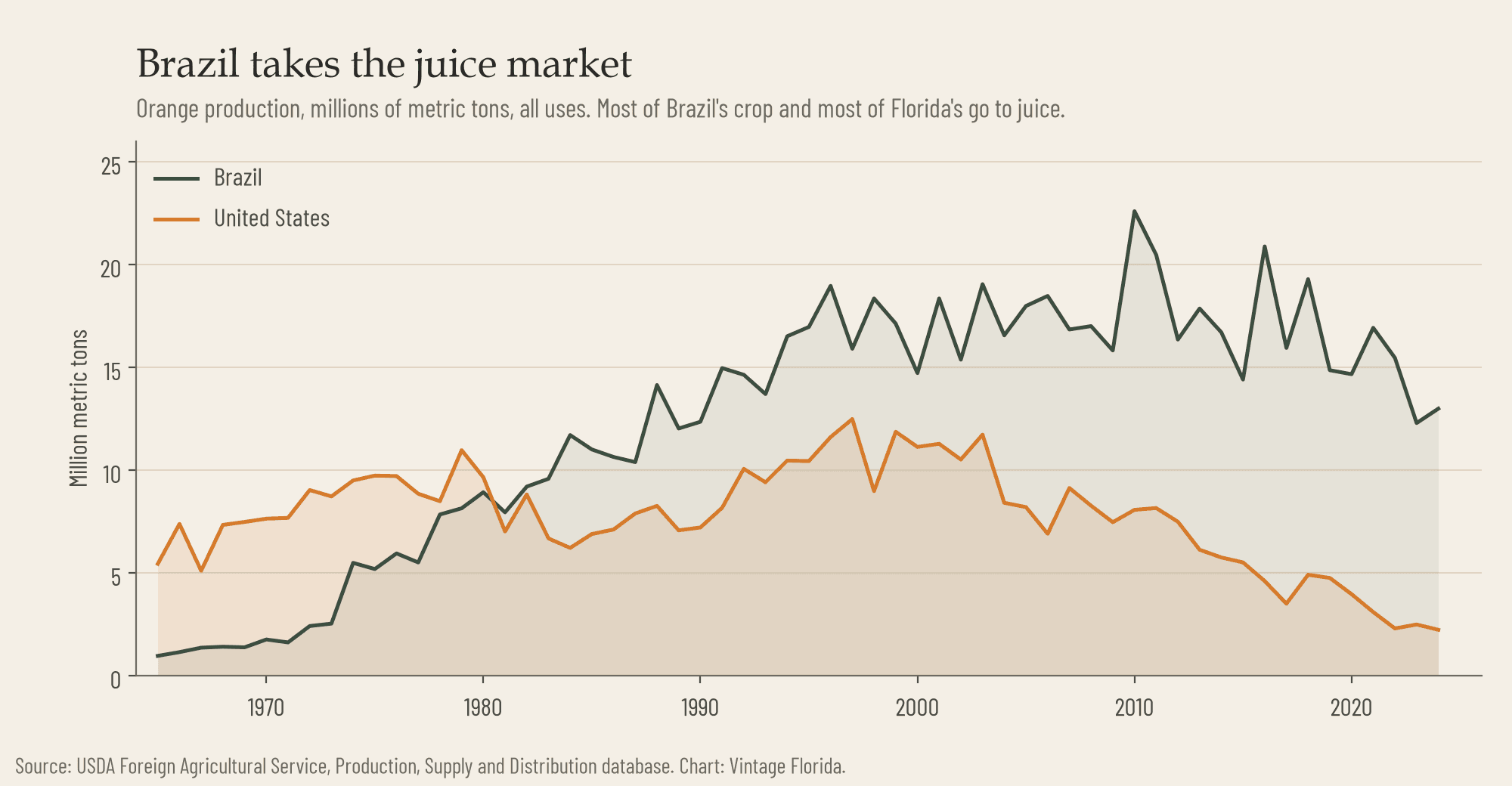
The 1962 freeze had one consequence that did not show up in Florida at all. Florida processors and growers, looking for a supply that could not freeze, went to Brazil and helped build groves and juice plants in the state of Sao Paulo. Brazil had produced about a million metric tons of oranges in the mid 1960s, less than a fifth of the American crop. By 1981-82 it was producing more oranges than the United States, and it has never given the lead back. Today Brazil sells about three quarters of the orange juice traded in the world. The United States charges a tariff of $415 a ton on Brazilian frozen concentrate, which came to about $86 million in 2024, and last summer's 50 percent tariff on Brazilian goods specifically exempted orange juice, because American bottlers cannot fill their cartons without it.
The 1980s brought the freezes that the older growers still measure everything against. The USDA inventory notes cold damage in January 1981, January 1982, December 1983, January 1985, January 1986, and December 1989. The Christmas freeze of 1983 held the Tampa Bay area at 17 degrees for several hours. Lake County, which had been one of the largest citrus counties in the state, lost most of its groves across those three freezes, replanting after each one until the December 1989 freeze took the replantings too. Statewide acreage fell from 845,283 in 1980 to 624,492 in 1986, and much of what died around Orlando did not come back as citrus, because by then the land under it was worth more as subdivisions. The belt consolidated south, into Polk, Highlands, Hardee, DeSoto, and Hendry counties. And there, for a decade, it thrived. By 1996 the state was back to 857,687 acres. In 1997-98 it picked 244 million boxes of oranges and 304 million boxes of citrus of all kinds. The count of orange trees peaked in 2000 at 87.2 million.
The Canker Years
Citrus canker is a bacterial disease that blisters leaves and fruit and, in a bad case, defoliates the tree. It does not kill trees the way greening does, but it makes fruit unsellable fresh and it spreads on wind and rain. Florida had eradicated it twice before, once between 1915 and 1933 at a cost of more than $6 million and a quarter million field trees, and again between 1984 and 1994. In 1995 it was found near Miami International Airport, and the state began a third eradication program that became one of the most contested public health campaigns in Florida's history.
The rule at the center of it, adopted in 2000 after a 125-foot radius had failed to contain the spread, said that every citrus tree within 1,900 feet of an infected one had to be destroyed, whether it showed symptoms or not. That radius took in a great many backyard trees in Miami-Dade, Broward, and Palm Beach counties, and crews with chainsaws went door to door. The program cost about $10 million in 1996 and about $145 million by 2000. The University of Florida's count is that more than 16 million trees were destroyed in nurseries, yards, and commercial groves before it ended. Then came 2004, when four hurricanes crossed the state within six weeks and carried the bacteria into groves that had been clean. The USDA concluded in January 2006 that eradication was no longer possible and stopped paying for it, and Florida halted the program that May. Homeowners sued. Orange County residents won a $42 million judgment for the trees the state had cut, paid out in 2022, and Miami-Dade homeowners received a $76.8 million settlement the same year, with separate cases in Broward, Lee, and Palm Beach. The disease is now endemic, managed rather than fought, and mostly a problem for fresh fruit.
Greening
The Asian citrus psyllid, a mottled brown insect about the size of an aphid, was found in Florida in 1998 and had spread to 31 counties within three years. The insect itself does little harm. What it carries does. In August 2005 inspectors confirmed huanglongbing, the citrus greening disease, in a tree in south Miami-Dade County near Homestead. It was the first find in the United States. The bacterium the psyllid injects plugs the tree's phloem, the tissue that moves sugar from the leaves to the roots and fruit. Leaves go blotchy, roots die back, fruit stays small and bitter and drops early, and over a few years the tree declines and dies. There is still no cure.
The spread was fast and the response was slow to find anything that worked. By early 2010 greening was through the central, southwest, and Indian River growing districts. By 2013 the state's plant industry division said it was in every county where citrus was grown commercially. A 2015 survey of growers responsible for about 30 percent of the state's acreage found 80 percent of their trees and 90 percent of their acreage infected. Two University of Florida economists, Alan Hodges and Thomas Spreen, put the cost of the first five seasons alone, from 2006-07 through 2010-11, at $3.6 billion in lost revenue and 6,611 jobs.
The production figures tell it plainly. Florida picked 242 million boxes of oranges in 2003-04, the season before the hurricanes. It picked about 150 million in 2004-05 and 2005-06, and held near that level through 2011-12. Then the sick trees started to go. The state picked 81.7 million boxes in 2015-16, 45 million in 2017-18 after Hurricane Irma, 41 million in 2021-22, and 15.8 million in 2022-23 after Hurricane Ian. The final count for 2025-26, issued in July, was 12.92 million boxes. The bearing orange trees behind those numbers fell from 79.6 million in 1998-99 to 25.8 million in 2024-25, and the trees that remain produce far less than they did. The average orange grove yielded 401 boxes an acre in 1997-98. In 2024-25 it yielded 73.
Weather piled on. Hurricane Irma in September 2017 dropped between 30 and 70 percent of the fruit in most groves and up to 90 percent in some. The state agriculture department put citrus losses at more than $760 million, and Congress eventually sent Florida citrus a $340 million block grant. Hurricane Ian in September 2022 cost the industry a further $247 million in lost fruit by the University of Florida's final estimate, before counting damage to trees, and Hurricane Milton in October 2024 another $23 million to $55 million. Then this past winter, two freezes in a row, one over New Year's and one at the end of January, hit an estimated 80 percent of the state's citrus acreage. The state's damage estimate for citrus alone was $674.66 million, most of it in dead and damaged trees and lost future production rather than fruit on the ground, and the USDA issued a disaster declaration in March.
The average orange grove yielded 401 boxes an acre in 1997-98. In 2024-25 it yielded 73.
The Market Moved Too
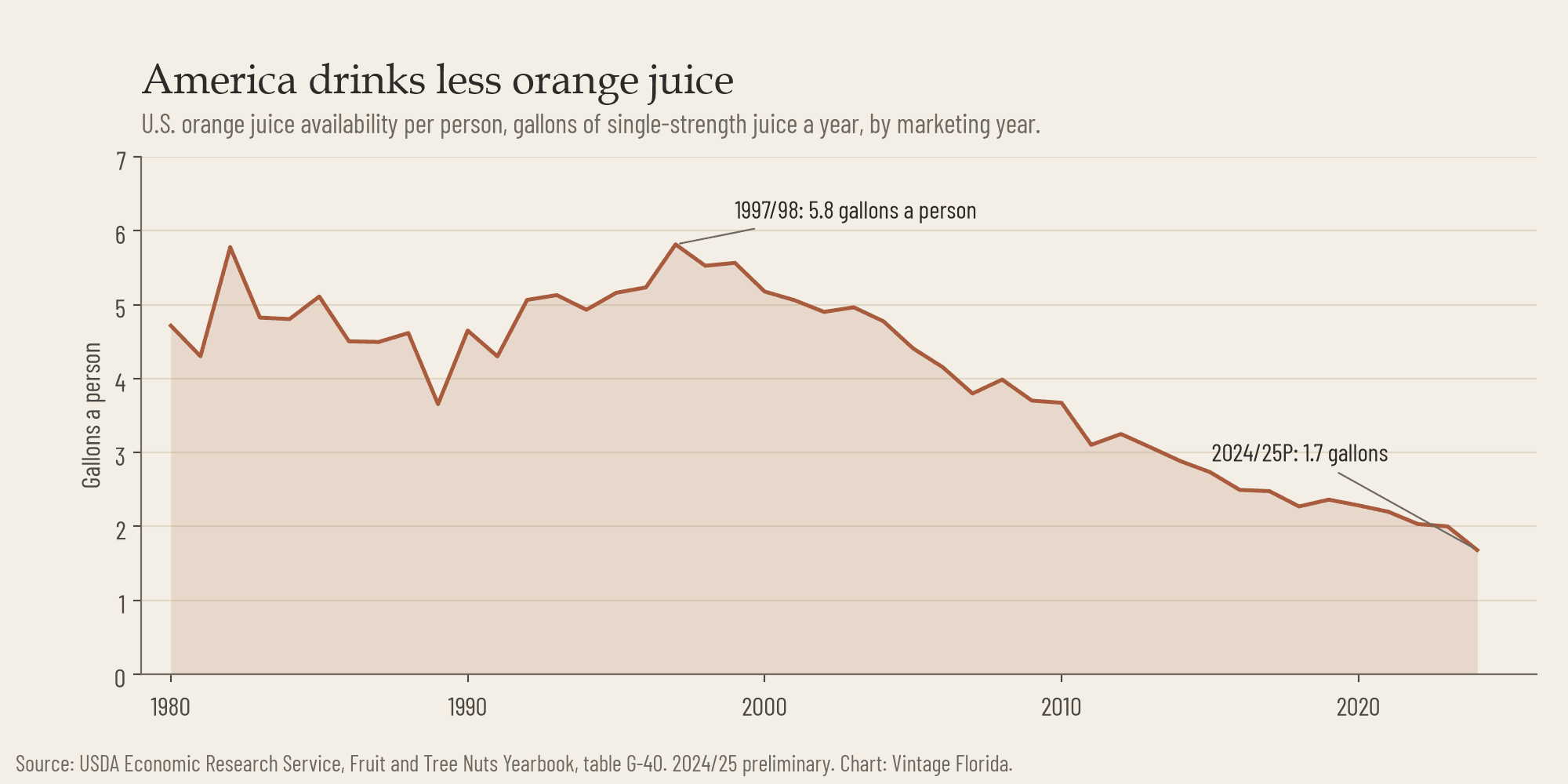
If greening had struck an industry selling into a growing market, the story might read differently. It did not. Americans drink about a third as much orange juice as they did when Florida was at its peak. The USDA's Economic Research Service puts orange juice availability at 5.8 gallons a person in the 1997-98 marketing year and 1.7 gallons in 2024-25. Some of that is price, since the shortage has pushed juice up sharply on the shelf. Most of it is habit. Breakfast changed, sugar became a worry, and a generation of shoppers who never bought a can of concentrate did not replace it with anything.
The companies that buy Florida's fruit have adjusted accordingly. Florida's Natural, the Lake Wales cooperative that built its name on juice squeezed only from Florida oranges, began blending in Mexican juice from concentrate in 2022 as its members' crop shrank. Coca-Cola, which said in 2013 that its Minute Maid brand bought close to a third of all Florida oranges, pledged that year to buy $2 billion of fruit over twenty years from 25,000 new acres that two growers agreed to plant. Tropicana's owner spent 2025 restructuring its debt. And in February of this year Coca-Cola stopped making frozen concentrate altogether, ending the product that had made the industry.
The industry itself has thinned to match. The Census of Agriculture counted 7,389 citrus operations in Florida in 2002 and 2,775 in 2017. Florida Citrus Mutual now describes its membership as nearly 2,000 growers. There were as many as 56 juice processors in the state in the 1980s and 31 in the 1990s. Cutrale closed its Leesburg plant in 2024, Tropicana no longer processes fruit in Florida, and by this spring the count of working juice plants was four. The state had 106 fresh fruit packinghouses in the 2000-01 season and 26 by 2016-17. The head of the packers' association counted eight this spring. In January 2025 Alico, one of the largest growers in the state with about 53,000 acres across eight counties, announced that it would stop growing citrus after the spring harvest, citing a 73 percent fall in its production over ten years. In April Collier County approved the first of two planned villages on its former grove land, up to 4,502 homes, with the pair designed to reach about 9,000.
How We Got Here
The disease is the cause. It is worth being clear about that, because the rest of the list can make it sound as though Florida citrus simply wore out. It did not. In 2004 the state had 748,555 acres of citrus and picked 242 million boxes of oranges. Absent the psyllid and the bacterium it carries, there is no reason to think it would not be doing something similar now. What the other factors did was take away the margin that would have let growers wait the disease out.
Weather took its share, on a schedule that gave trees no time to recover. Four hurricanes in 2004, then Irma, Ian, and Milton at five and two year intervals, then the freezes of last winter. Each storm dropped fruit, and each one also spread canker and stressed trees already fighting greening. The market took its share, with juice consumption falling for most of 25 years and Brazilian supply setting the price. Labor took its share. Nearly the whole Florida harvest is now picked by guest workers on H-2A visas, 93 percent of harvest crews in the 2021-22 season, at a federally set wage that rose from $14.77 an hour in 2024 to $16.23 in 2025, on fruit that was paying less. And land took the biggest share of all, because the same ridge that grows oranges is the fastest growing part of a state adding more than 800 people a day. A grower with a sick grove, a hurricane deductible, and an offer from a developer does the arithmetic.
Two policy choices are worth naming. The first is the canker program, which spent a decade and hundreds of millions of dollars cutting down healthy trees within 1,900 feet of sick ones, damaged the state's standing with the public it needed, and was abandoned anyway when the hurricanes made the point moot. The second is the twenty year wait for a tree that can resist greening. The disease was found in 2005. The Citrus Research and Development Foundation was created in 2009 to coordinate the science. The director of the university's citrus research center said in 2024 that a truly resistant tree was still a number of years away. Growers have spent those years spraying for psyllids and feeding sick trees, which worked well enough to keep some of them in business and not well enough to keep most of them planting. The state now spends more on citrus than it ever has. It is spending it on an industry with about a quarter of the acreage it had in 2006 and less than a tenth of the orange crop.
What Is Being Done
For the first time since 2005, growers have a treatment that measurably works. In October 2022 the state approved an injectable form of the antibiotic oxytetracycline, sold as ReMedium TI, for use in bearing trees, and a second product, Rectify, followed in January 2023. A tree is drilled at the trunk and the drug is pushed into the vascular tissue where the bacterium lives. A University of Florida survey in 2024 found that 79 percent of growers were using it, that 84 percent had seen yields improve, and that 71 percent had seen fruit drop fall by more than a fifth. It costs about $1.32 a tree per treatment. In June of this year the EPA gave the first product a full registration, allowing two years of use followed by one year off. It is not a cure. It keeps a sick tree producing. This season the crop rose about five percent while the acreage behind it fell by a fifth, which is what a treatment that keeps sick trees productive looks like in the numbers.
Younger trees get a different set of tools. Individual protective covers, mesh bags that go over a new tree and keep the psyllid off until the tree is big enough to stand a chance, were on more than a million trees across some 17,000 acres by the end of 2023. Citrus under protective screen, whole groves grown inside a screenhouse, reached about 1,500 acres in 2025 and more than 2,000 planted acres this year, most of it only now coming into production and all of it grown for the fresh market rather than juice. The state has released the parasitic wasp Tamarixia radiata against the psyllid by the millions each year. Breeders at the USDA's laboratory in Fort Pierce have released rootstocks such as US-942 that hold up better under infection. The University of Florida released Sugar Belle, a mandarin, in 2009, and it is about as tolerant of greening as anything in the ground. USDA researchers found Donaldson, a sweet orange that appears to keep producing after infection, in an old block at Groveland in 2021. The university's own variety guide is careful to say that none of them is resistant.
Resistance is finally close enough to see. In April the EPA registered a rootstock called CarriCea T1, developed in Nian Wang's laboratory at the Lake Alfred center and edited with CRISPR to disrupt the way the bacterium works on the tree, and the USDA cleared it for planting in July. More than 300,000 trees have already been ordered from the company licensing it. A second approach, a spinach defensin peptide delivered into the tree by a harmless citrus virus, a line of work that began at Southern Gardens Citrus more than a decade ago, received an unconditional federal registration this summer and is expected to be available in Florida late this year. Neither has been proven in a commercial grove over a full cycle. A rootstock takes years to show what it can do. But for the first time the question is when, not whether.
The money has followed. The Citrus Research and Field Trials program, which pays growers to plant and manage trial blocks under new methods, put $104.5 million to work in the 2025-26 budget and has $160 million for 2026-27. The state budget signed in June carries nearly $196 million for citrus in all, against about $47 million two years earlier. The federal Emergency Citrus Disease Research and Development Trust Fund, created in the 2018 farm bill, adds $25 million a year. In March the legislature merged the research foundation into the field trials program, now set to take effect October 1, on the argument that one organization with grower money and state money in the same hand would move faster. The USDA bought $30 million of Florida citrus for food programs last November. The state's Rural and Family Lands Protection Program, which buys development rights on working farms, has $425 million this year and has begun using it on groves, among them 816 acres in Putnam County and 485 in Hardee. A 2025 tax change lets a grower keep the agricultural classification on a grove that is out of production under a state compliance agreement for ten years instead of five, which is the difference between resetting a grove and selling it.
What Needs to Happen
The people who run the industry do not disagree much about this. Matt Joyner, who heads Florida Citrus Mutual, has said that losing the industry is not an option and that what the growers need most is a few good weather years. Michael Rogers, who directs the Lake Alfred center, has said that the durable answer is genetic, a resistant tree, and that the land has to stay zoned for farming long enough for one to arrive. Shannon Shepp, who runs the Department of Citrus, has said plainly that the industry needs help on many levels and that its first job is to keep a market for the growers who are left. Here is what their own documents and the record above add up to.
- Get the resistant trees into the ground, and pay for the years in between. A rootstock registered in April 2026 will not bear a commercial crop before the end of the decade. The state has put up serious money for the first time. It has to keep doing so for a decade, through budgets in which the industry will be small and easy to overlook, or the money already spent is wasted.
- Keep the land. Every acre that goes to houses is gone for good, and the state lost more than 40,000 acres of groves in the past year alone. Conservation easements through the Rural and Family Lands program, the ten year greenbelt extension, and money to hold a grove in reset rather than sell it are the only tools that address this, and they are new and small against citrus land that went from about $8,400 an acre in 2019 to about $13,800 in 2025, with parcels in the path of development selling for several times that.
- Stop counting on juice. Per capita consumption has fallen by more than two thirds since 1998 and Brazil sets the price. The parts of the industry that are growing, screenhouse mandarins, Indian River grapefruit for export, gift fruit, fresh juice sold as Florida juice, are small and they are profitable. The Department of Citrus has a total budget of about $23 million and a mandate written for a commodity business. The next version of Florida citrus is a specialty crop, and it should be sold like one.
- Treat the trees that are standing. Oxytetracycline injection is the one tool that has moved yields on sick trees. Four out of five growers use it. The other fifth, and the trees they own, are the difference between a floor and a further fall.
- Be honest about the size of the thing. Florida is not going back to 244 million boxes, or to 900,000 acres. A stable industry of a few hundred thousand acres, on resistant trees, growing fruit that pays, is a reachable goal. The alternative is not a smaller industry. It is Alico's answer, which is houses.
The land Dummett planted on Merritt Island belongs to the space program now, though the Indian River name he made is still on the fruit. What he did in the 1830s was not complicated. He looked at a crop that kept dying in one place and worked out how to grow it in another, on a different rootstock, high enough off the ground to live. The state that grew out of his island has spent twenty years waiting for someone to do that again. This summer, for the first time, it looks as though someone has. Whether there are still groves left to plant it in is the question the next decade will answer.
Questions people ask
- Why is Florida citrus dying?
- Mostly greening. The Asian citrus psyllid was found in Florida in 1998, and in August 2005 inspectors confirmed huanglongbing, the citrus greening disease, in a tree near Homestead, the first find in the United States. The bacterium the insect injects plugs the tree's phloem, so leaves go blotchy, roots die back and fruit stays small and bitter and drops early. On the production chart every freeze of the past century shows as a notch; greening shows as a cliff. Freezes in the 1980s, canker, hurricanes and the sale of grove land for houses did the rest.
- How many oranges does Florida grow now?
- In the season that ended in summer 2026 Florida picked 12.9 million boxes of oranges, against a peak of 244 million boxes in the 1997-98 season on more than 800,000 acres. The August 2026 inventory counted 165,359 acres of citrus of all kinds, a fifth less than the year before.
- Is Florida still the biggest orange producer?
- Not since the early 1980s. After the 1962 freeze, Florida processors and growers looking for a supply that could not freeze helped build groves and juice plants in the Brazilian state of Sao Paulo. Brazil produced about a million metric tons of oranges in the mid 1960s, less than a fifth of the American crop, and by 1981-82 it was producing more oranges than the United States. It has stayed far ahead since.