
culture · 5 min
Citrus Labels as Folk Art
The lithographed crate labels that sold a northern country its idea of Florida.
By The Editors ·
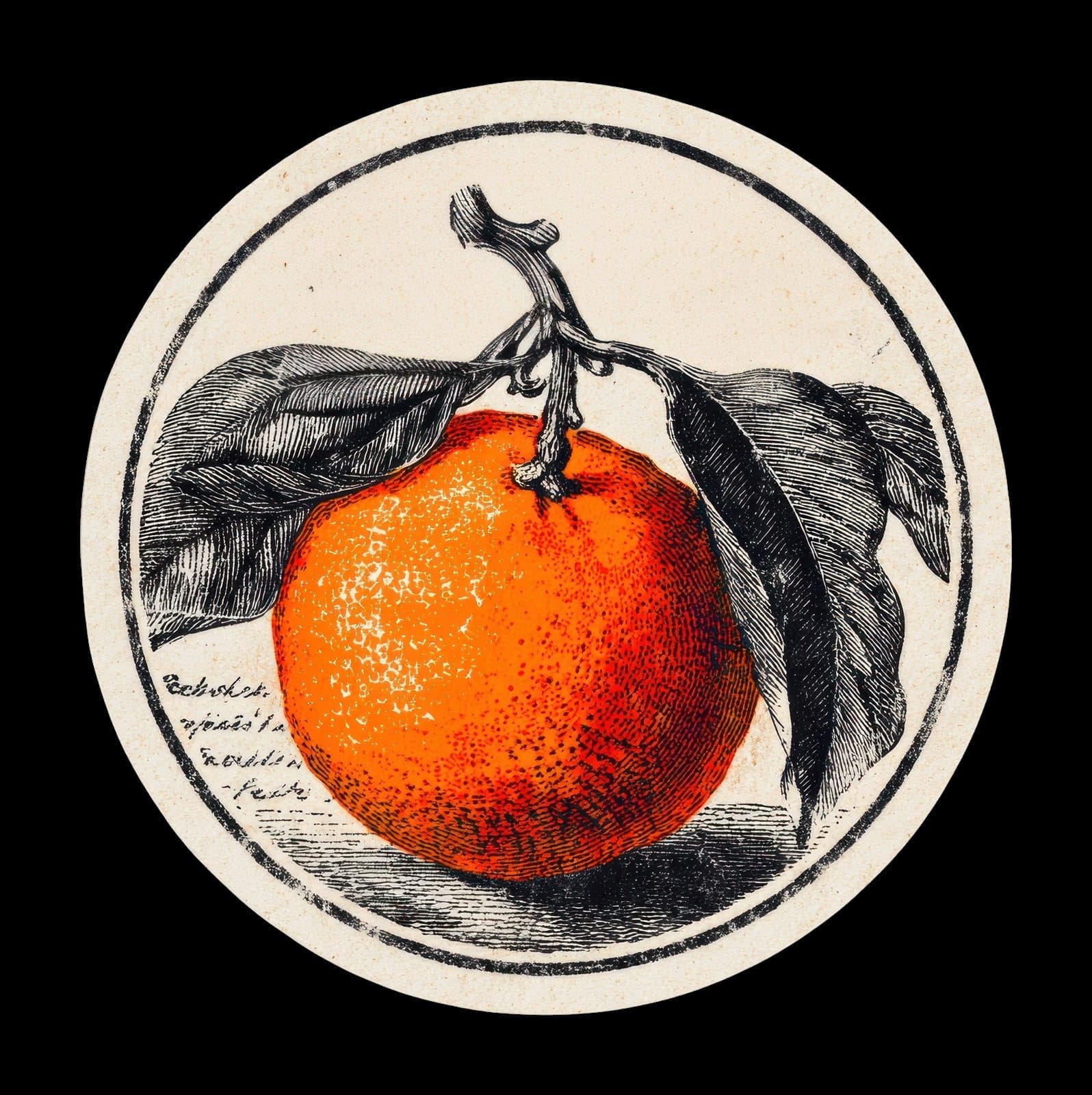
By the time a crate of Florida oranges reached a market in New York or Chicago, the grower was a thousand miles away and a stranger. What the buyer saw was the label. A square of bright lithographed paper glued to the end of the wooden box, and for half a century it did the work no salesman could do in person.
Citrus came to Florida with the Spanish in the 1500s, but the business of shipping it north did not take off until the late 1800s. The Great Freeze of 1894 and 1895 nearly ended it, killing groves to the ground across the center of the state. Growers replanted, often farther south, and by the 1910s the harvest was back to its old size and still climbing. With more fruit than ever moving by rail, the packinghouses needed a way to tell one shipper's oranges from the next.
They borrowed the answer from California, where growers were already dressing their crates in color. A standard label ran about nine inches square and sat in the recessed end of the crate, facing out as the boxes were stacked in a boxcar or a store. Smaller sizes, six inch squares and long three by nine strips, went on half boxes and gift boxes. Printed by stone lithography in deep, saturated inks, the labels were cheap to make by the thousand and almost impossible to ignore.
Place names did a good deal of the selling. Indian River on a label meant fruit from the long lagoon on the Atlantic coast, where the growing conditions gave the oranges a name for sweetness, and shippers guarded that name the way a vineyard guards an appellation. Other labels leaned on the romance of the frontier or the glamour of the new resorts. All of them were teaching a northern buyer to want one particular box over the identical looking one beside it.
Selling the Sunshine State
The pictures on them were rarely about oranges. They sold an idea of Florida, and they sold it to people shoveling snow. Palm trees and flat calm water. Sunsets in colors no press could quite hold. Herons, sailboats, and a sky that was always just clearing. People turned up too, in the fashion of each passing decade: southern belles, flappers, pinup girls, cowboys, pirates, and explorers, with the occasional run of patriotism, sport, and gleaming new machines. A brand might be named for a place, a family, an animal, or a mood, and the label made its case in a single glance.
The printing was a craft of its own. Stone lithography built a picture up one color at a time, a separate stone for each, so a label with a deep sunset and a green palm and a blue bay might take a dozen careful passes through the press. The artists who drew them mostly went unsigned, commercial hands working to a brief, and their work has outlasted nearly everything else the packinghouses made.
Their best years ran from about 1900 to the late 1930s, a stretch collectors now call the golden era. A single packinghouse might cycle through dozens of designs, switching labels by grade and by season, which is part of why so many survive. None of it was meant to last. The label was advertising, printed to be seen once at the far end of a long trip and then thrown out with the box.
Out of Work Overnight
What ended them was not taste but packaging. By the middle of the 1950s the wooden crate was giving way to the cardboard carton, and a carton needed no separate label. A company could print its name and artwork straight onto the box. Almost at once the lithographed label had nothing left to do. The print runs stopped, and the stones and the leftover stacks of paper went into storage and were forgotten.
They came back as art. Old labels turned up by the bundle in the attics of packinghouses and growers' homes, never used and still bright, and people began to frame them. Today they read as a pictorial history of the state, a record of how Florida pictured itself and how it wanted the rest of the country to picture it. Large collections are held at the State Library of Florida, the University of Florida, and Florida Southern College, and good originals still change hands among collectors.
We like them for the honesty under the fantasy. A crate label was never trying to document Florida. It was trying to sell it, which makes it a clearer self portrait than most photographs of the same years. Stack a few together and you can watch a young state decide, decade by decade, exactly how it wanted to be seen.
Questions people ask
- How were orange crate labels printed?
- By stone lithography, which built a picture up one color at a time with a separate stone for each, so a label with a deep sunset, a green palm and a blue bay might take a dozen passes through the press. A standard label ran about nine inches square and sat in the recessed end of the wooden crate, facing out as the boxes were stacked in a boxcar or a store; six inch squares and three by nine strips went on half boxes and gift boxes. The artists were mostly unsigned commercial hands, and Florida borrowed the whole idea from California, where growers were already dressing their crates in color.
- Why did orange crate labels stop being made?
- Packaging, not taste. By the middle of the 1950s the wooden crate was giving way to the cardboard carton, and a carton needed no separate label because a company could print its name and artwork straight onto the box. The print runs stopped almost at once, and the stones and the leftover stacks of paper went into storage, which is why unused labels still turn up in quantity.