
history · 7 min
The Storm That Killed the Railroad
On Labor Day 1935 the strongest hurricane ever to strike the United States crossed the Upper Keys, drowned the veterans' camps, wrecked the rescue train and ended Flagler's railroad to Key West.
By The Editors ·
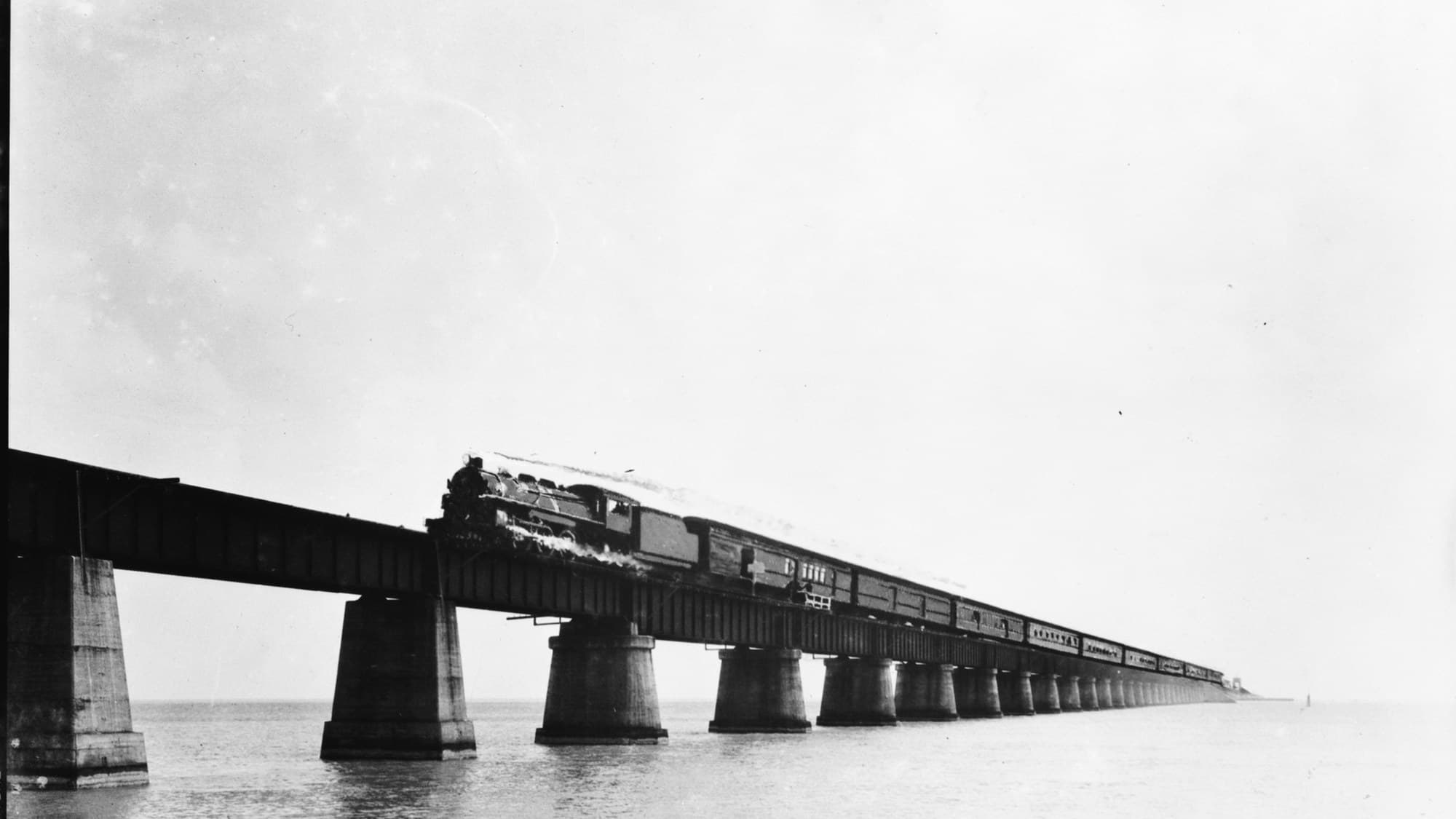
The train left Miami at 4:25 on the afternoon of Monday, September 2, 1935. It was Labor Day. Fred Ghent, who ran the veterans' work camps in the Keys for the Florida Emergency Relief Administration, had called for it around two, and the Florida East Coast Railway had needed most of the time since to find a crew on a holiday. J.J. Haycraft had the throttle. Behind his engine were eleven cars, and ahead of him lay 80 miles of single track to the camps on Windley Key and Lower Matecumbe, where close to 700 men were waiting on a promise that a train would come if a storm did.
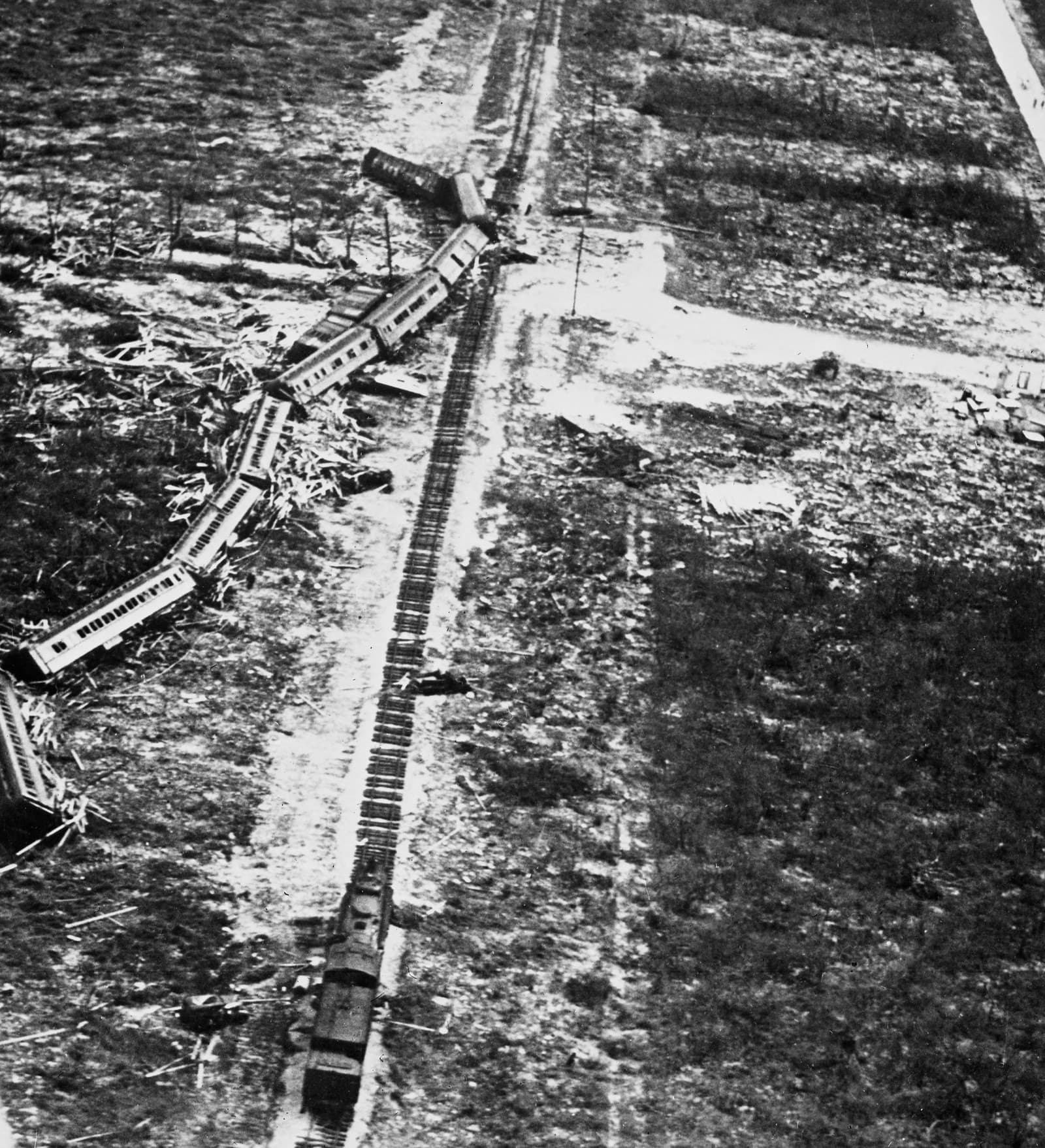
It did not go well. A drawbridge over the Miami River was open when the train reached it. A few miles short of Islamorada a steel cable, blown across the track, caught the engine and cost 80 minutes to clear. The train pulled into Islamorada a little after eight, in the dark. Minutes later the sea came across Upper Matecumbe Key, 18 feet of it or more, and lifted the cars off the rails. The 160 ton locomotive stayed upright. The people in the cars lived. The train never went another mile.
The Men in the Camps
The men it had come for were leftovers of the Bonus Army. In the summer of 1932 thousands of World War I veterans had camped in Washington asking for early payment of a service bonus Congress had promised them, and on July 28 troops under Douglas MacArthur cleared them out with tanks and bayonets. Roosevelt's administration preferred to give such men work far from the capital. Starting in November 1934 the Florida Emergency Relief Administration sent several hundred of them to the Keys, to three camps of frame shacks set a few yards from the Atlantic: Camp 1 on Windley Key, Camps 3 and 5 on Lower Matecumbe. The payroll for August 30, 1935 carried between 682 and 695 names, depending on who counted.
Their job was a bridge. The Overseas Highway had reached Lower Matecumbe in January 1928 and stopped at a ferry slip; the next 40 miles to No Name Key were crossed by boat. The veterans were to start closing that gap with a span across Channel 2, from Lower Matecumbe toward Jewfish Bush Key. By Labor Day they had built up a fill island and set eight concrete piers in the shallows.
Sunday and Monday
The Weather Bureau had been watching the storm since Saturday, August 31, when its first advisory put a small disturbance of "considerable intensity" near Long Island in the Bahamas. On Sunday morning the Bureau said hurricane winds in a small area near the center would pass through the Florida Straits that night or Monday, and ran storm warnings from Fort Pierce to Fort Myers. The forecasters in Jacksonville, Gordon Dunn and Grady Norton, expected it to keep west along the north coast of Cuba toward Havana. At 1:30 on Monday afternoon they ordered a hurricane warning for Key West. At 4:30 a special bulletin said the storm had turned northwest, toward the Keys. By then Haycraft's train had been moving for five minutes.
In the camps the men had no way off the islands but the railroad. Ghent, in Jacksonville, had assumed the FEC kept a train standing ready at short notice; Ray Sheldon, the camp superintendent at Islamorada, waited on Ghent. A Cuban army pilot, Leonard Povey, flew a Curtiss Hawk out on Monday to look for it, the first time an airplane had been sent after a hurricane. At the Hotel Matecumbe the owner, Ed Butters, watched his barometer reach 26.00, decided it was broken and threw it out of his car window. At Craig Key a boat captain named Ivar Olsen read 26.35 inches, 892 millibars, on an instrument the Weather Bureau later tested and accepted. No hurricane has come ashore in the United States with a lower pressure since records begin in 1851. The Bureau's own observer at the Long Key fishing camp, J.E. Duane, logged 26.98 at 10:15 that night and wrote that the sea "began to lift up." Modern estimates put the sustained wind at 185 miles an hour. The surge ran 18 to 20 feet.
The men had been promised a train. It left Miami at 4:25 on Monday afternoon and reached Islamorada a few minutes before the sea did.
What Was Left
The counting took months. The Red Cross and the Weather Bureau settled on 408 dead, the figure the National Hurricane Center still prints. The Florida relief administration listed 423 by November 19, 1935, 259 of them veterans, and 485 by the following March, as bodies kept turning up in the mangroves and across Florida Bay. Survivors said the wind had driven sand hard enough to strip the dead. The first 109 bodies went to Woodlawn Cemetery in Miami. The rest could not wait. On Saturday, September 7, 38 bodies were burned together beside Snake Creek, and over the following week 136 more on Upper Matecumbe and 82 on Lower Matecumbe.
Ernest Hemingway came up from Key West within days. He wrote to his editor, Maxwell Perkins, that not a building stood on the Matecumbes and that the men "were practically murdered," since the officials had "all day Sunday and all day monday" to move them. New Masses printed his report on September 17 under a title the editors sharpened to "Who Murdered the Vets?" In it he asked who had sent nearly a thousand war veterans to live in frame shacks on the Florida Keys in hurricane months.
Washington answered twice. Aubrey Williams of FERA reported to Roosevelt on September 8 that the disaster "must be characterized as an act of God." A Veterans Administration investigator, David Kennamer, took sworn testimony and in October named three Florida relief officials, Conrad Van Hyning, Ghent and Sheldon, as negligent for waiting too long to call the train. His report was never released. In the spring of 1936 a House committee under John Rankin of Mississippi held hearings on a bill for the widows and children; Kennamer testified and was not asked about his findings. Rankin's report, in the historian Willie Drye's reading of it, found no one at fault in a single paragraph, over a minority opinion from Edith Nourse Rogers of Massachusetts calling it a cover up. That January, Congress had already paid the bonus the men marched for, over Roosevelt's veto.
The WPA built the memorial. It stands at Islamorada, 65 feet of local keystone with a 12 foot shaft carved with bending palms over a crypt, and it cost about $12,000. On November 14, 1937, four or five thousand people came to see it dedicated, and the ashes of roughly 300 of the dead were sealed inside.
The Railroad
The storm took about 40 miles of track and embankment and left the big bridges standing with minor damage. That was enough. The Florida East Coast Railway had defaulted on its bonds on September 1, 1931, and had been in receivers' hands since; the extension had cost over $20 million to build and had never paid. Rebuilding the washed-out miles was priced at $1.8 million to $2.9 million, and the receivers chose to abandon everything south of Florida City. In 1936 the Interstate Commerce Commission agreed, and the state's Overseas Road and Toll Bridge District took the roadbed and bridges for $640,000, with a $3.6 million federal loan to turn them into a road. Flagler's 14 foot bridges were widened to two lanes with steel beams cantilevered out over the water under a concrete deck.
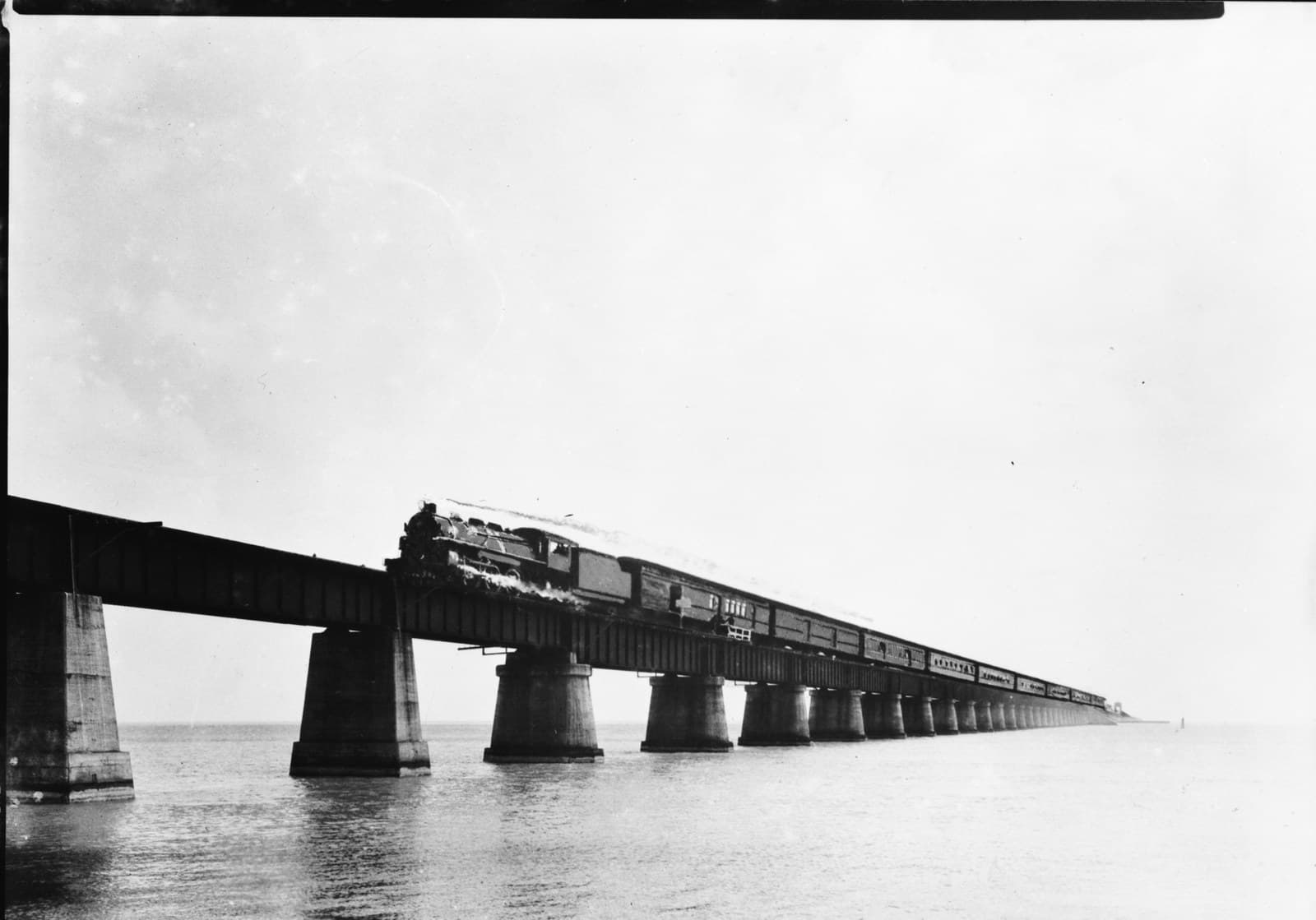
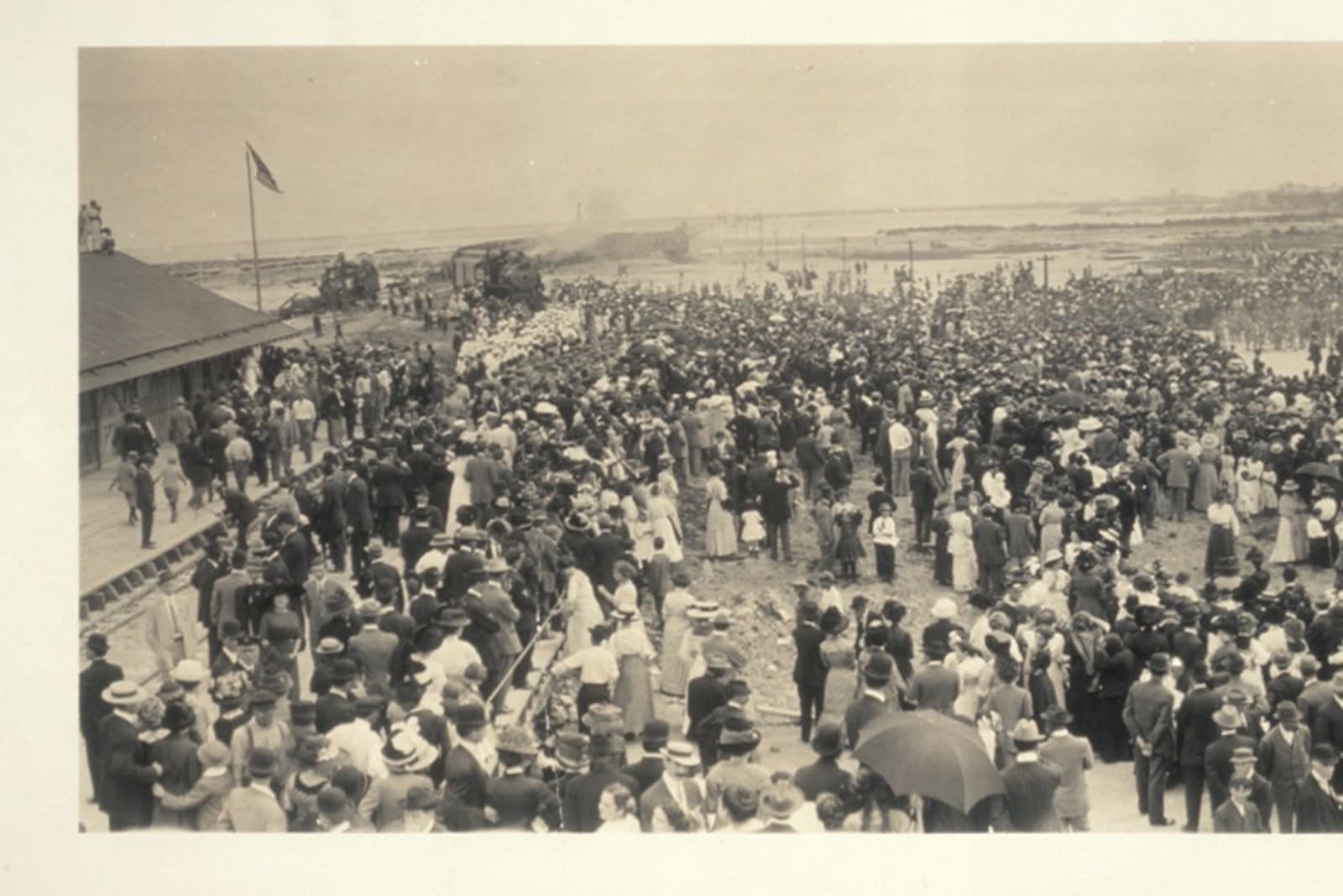
On the morning of March 29, 1938, the daughter of the Cuban consul in Key West cut a ribbon on the Pigeon Key bridge and the first cars drove through to Key West on the railroad's own spans. The formal celebration came on July 4. The state built new bridges beside the old ones in the early 1980s and left the originals for fishing and walking. The 2.2 miles of old bridge from Marathon to Pigeon Key were rebuilt for about $44 million and reopened to walkers on January 12, 2022. And out in the shallows west of Veterans Key, a quarter mile from the modern Channel 2 bridge, the eight piers the veterans set in the summer of 1935 are still there.
Questions people ask
- How strong was the 1935 Labor Day hurricane?
- It is still the strongest hurricane known to have come ashore in the United States. A barometer at Craig Key, read by a boat captain named Ivar Olsen and later tested by the Weather Bureau, fell to 26.35 inches, or 892 millibars, the lowest pressure recorded at any U.S. landfall since records begin in 1851. The National Weather Service puts the sustained wind at 185 miles an hour, a Category 5. The sea rose 18 to 20 feet over islands that stand only a few feet above it. The storm was small, with a calm center perhaps eight miles across, and it crossed the Keys between Craig Key and Long Key on the night of September 2, 1935.
- Why were World War I veterans in the Florida Keys in 1935?
- They were leftovers of the Bonus Army, the veterans who had camped in Washington in 1932 asking for early payment of a promised service bonus and had been driven out by troops. The Roosevelt administration put such men to work far from the capital. Beginning in November 1934 the Florida Emergency Relief Administration sent several hundred of them to three camps of frame shacks on Windley Key and Lower Matecumbe Key, where they were to begin bridging the 40 mile ferry gap in the Overseas Highway with a span across Channel 2. The payroll for August 30, 1935 carried between 682 and 695 names. Roughly 260 of the men died in the storm.
- What happened to Flagler's railroad after the 1935 hurricane?
- It never ran to Key West again. The storm destroyed about 40 miles of track and embankment but left the big bridges standing. The Florida East Coast Railway had been in receivership since 1931 and the extension had never paid, so the receivers abandoned the line south of Florida City. In 1936 the Interstate Commerce Commission approved the abandonment and the state's Overseas Road and Toll Bridge District bought the roadbed and bridges for $640,000. With a $3.6 million federal loan the 14 foot railroad bridges were widened to two lanes, and on March 29, 1938 the first cars drove to Key West over them. The 1912 spans still stand beside the bridges built in the early 1980s.