
history · 7 min
The Lectors of Ybor City
The readers Tampa's cigar rollers hired and paid themselves, and the November morning in 1931 when the platforms came out.
By The Editors ·
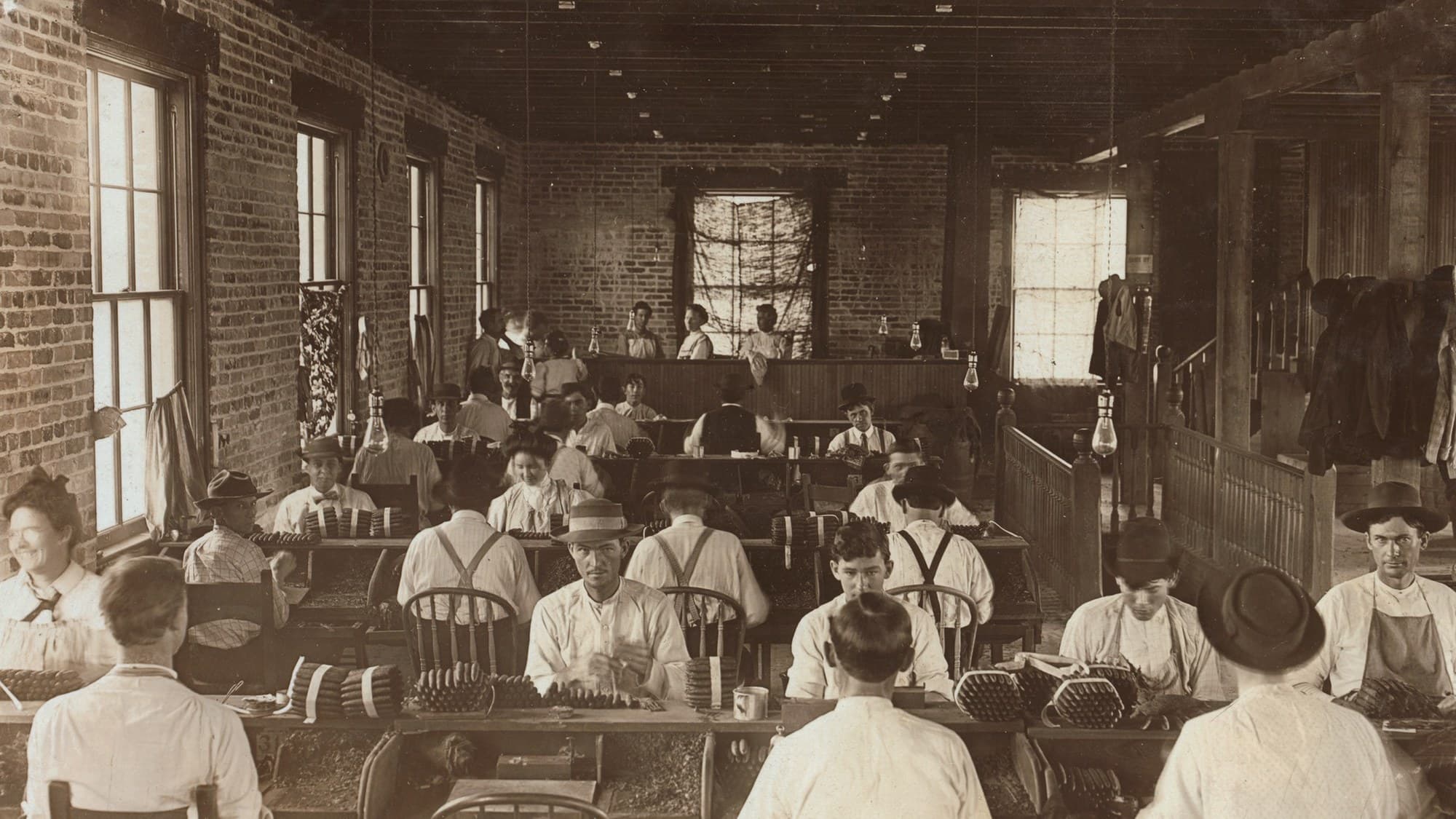
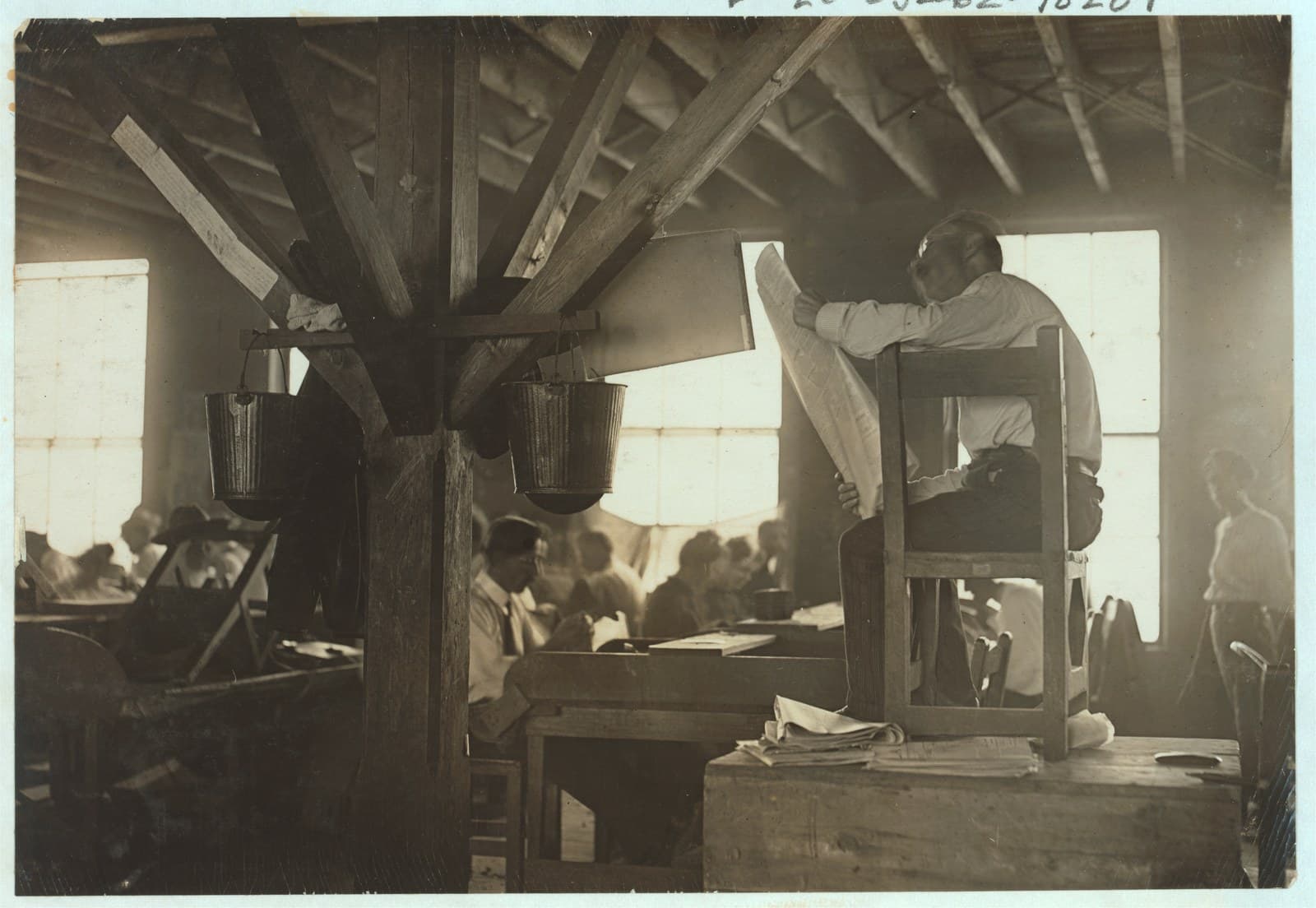
In January 1909 Lewis Hine walked into a Tampa cigar factory with a camera and came out with a photograph of a man on a platform, reading. Hine was in town for the National Child Labor Committee, looking for boys under fourteen at the benches, and his caption is the plainest account of the custom that survives. "He reads books and newspapers at top of his voice all day long. This is all the education many of these workers receive. He is paid by them and they select what he shall read." Four sentences. Everything that mattered about the lector is in them.
The custom was Cuban. In 1865 Saturnino Martínez, a cigar maker and poet who published a workers' paper called La Aurora, arranged the first readings at the El Fígaro factory in Havana. Partagás took it up the next year and most of the city's factories followed. William Seward, the American secretary of state, toured Partagás in January 1866 and noted, by Gary Mormino and George Pozzetta's account, the profound silence on the floor as the rollers listened. In May 1866 the Spanish governor banned the readings as subversive. By one account the rollers struck and got their readers back.
Vicente Martínez Ybor bought 40 acres two miles northeast of Tampa on October 5, 1885, and moved his business up from Key West. The first cigars came off the benches in April 1886, at Sanchez y Haya's factory, with Ybor's a few days behind. The rollers came with him, and the readers came with the rollers. By 1900 the city was calling itself the cigar capital of the world. At the peak, in 1929, about 500 million hand-rolled cigars came out of more than 200 factories in Ybor City and West Tampa. The marker outside El Reloj says 150; the count depends on whether you include the small shops.
Twenty-five Cents a Week
The lector did not work for the factory. He worked for the men at the benches, who paid him a quarter a week each. With a few hundred rollers under one roof, a good reader could clear $100 a week, which made him one of the best paid men in the building. The workers chose him. A candidate read a passage the floor had picked (in Araceli Tinajero's history a bell rang him on and off) and the floor voted. They chose the books too. Domenico Giunta, a Sicilian roller interviewed for the University of South Florida's Ybor City oral history project in 1984, described the ballot: a dozen titles put up, each man marking a first, second and third choice, the three winners read in turn over the next nine months.
The lector read in two sessions, close to four hours in all. The morning was for the papers: the dailies from Havana and Spain, the New York papers, and the Tampa Tribune, which he translated as he went. The afternoon was for the novel, a chapter or two a day. All of it was in Spanish, which is how Sicilian rollers who never learned to read came to recite Don Quixote. Cervantes was the favorite in nearly every factory. After him came Victor Hugo, Zola, Pérez Galdós, Dickens, and Dumas, whose Count of Monte Cristo was asked for so often that a Havana factory took the name Montecristo in 1935. In the evening the reading went home. Giunta's sister stripped tobacco and never went to school. "Each evening my sister used to come home and give us, verbally, the episode that took place," he said. "She only heard."
Abelardo Gutiérrez Díaz, who learned the trade in Havana and told his story to the historian Louis Pérez in 1974, said the job was acting as much as reading. "The lector had to be something of an actor. He had to breathe life into his protagonists." Manuel Aparicio, who arrived at fifteen and became the best known of them, was prized for giving every character a different voice. Victoriano Manteiga came from Havana in 1914 and read, the family paper says, at the Morgan factory. Nearly all of them were men; Nancy Hewitt found the women cigar workers hiring a lector of their own in 1888.
The Papers the Owners Did Not Like
The novels were never the problem. The papers were. Along with the dailies the rollers asked for the labor press, and one list of what was read includes Tierra y Libertad from Barcelona, El Despertar from Key West, the Daily Worker, and El Internacional from Tampa itself. Eugenio Rodríguez, a roller, remembered hearing about Bakunin and Kropotkin from the platform. The manufacturers, who had been through a string of strikes since the 1890s, decided the man on the platform was the cause. In the Depression a Communist affiliate, the Tobacco Workers Industrial Union, signed up more than half of Tampa's roughly 10,000 cigar workers. On November 7, 1931 the union tried to march from the Labor Temple to mark the anniversary of the Russian Revolution. Police and American Legion volunteers blocked the street; by the Tampa Tribune's account bricks flew and an officer was shot; seventeen workers went to jail.
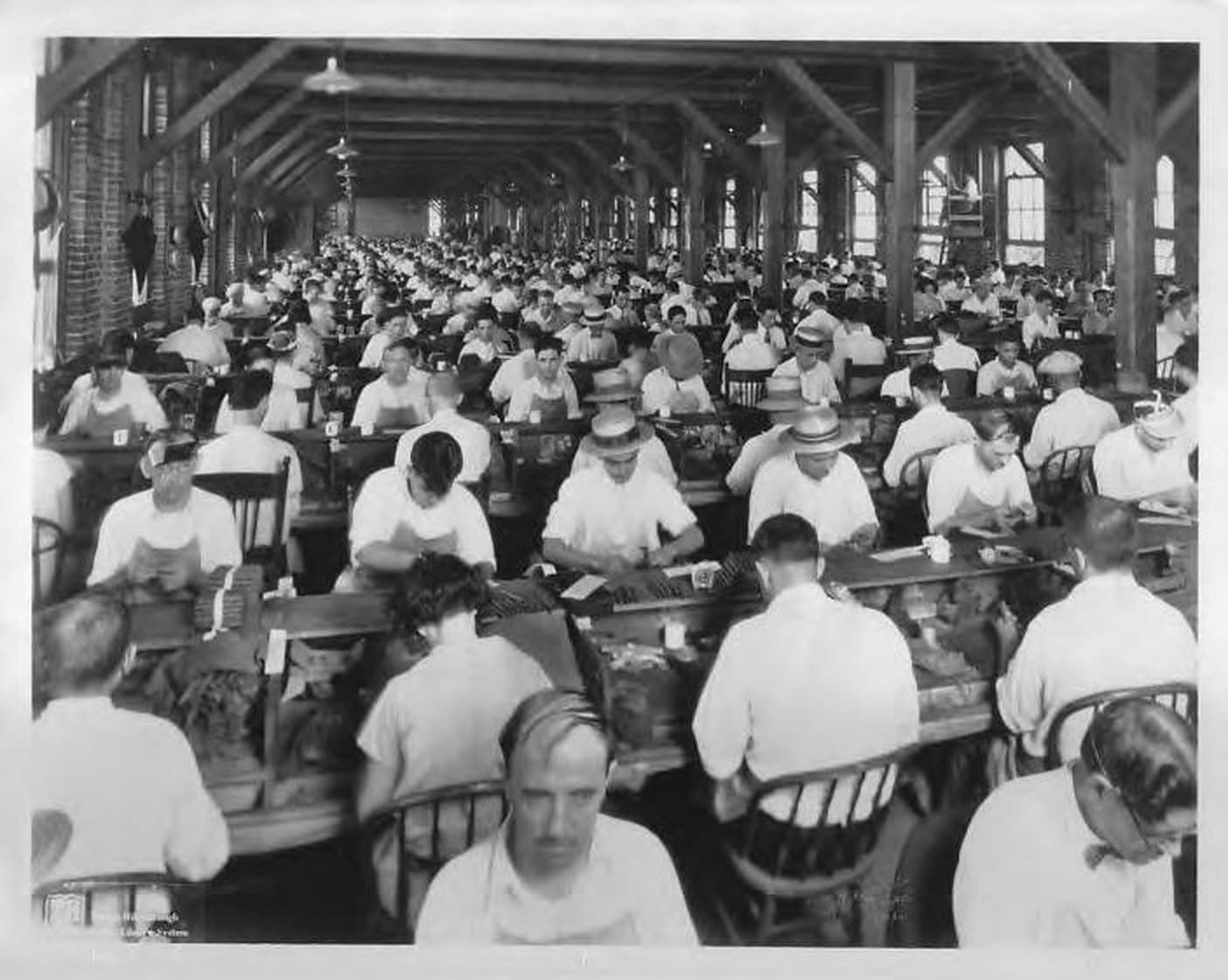
Three weeks later the owners moved on the readers. On the morning of November 27, 1931 (one account says the 26th) the platforms were pulled out of the factories and broken up, and the manufacturers' association announced that the lectura was finished, on the ground that the readers spread Communist propaganda. The rollers walked out, between 7,000 and 10,000 of them by various counts. The walkout lasted days, and then the owners, who by one report had already made their Christmas stock, locked the doors and waited. A federal judge enjoined the union's leaders. A committee of 25 businessmen organized to wash the red out of the factories, in one member's words. Within two weeks the workers voted to go back, and in the middle of December the factories reopened on the owners' terms: open shop, no union, and no readers. A radio went up where the platform had been.
"He is paid by them and they select what he shall read." Lewis Hine, Tampa, January 1909.
What Became of the Readers
Manteiga had already left the platform. In 1922 he founded La Gaceta, an afternoon Spanish daily for the people he used to read to, and the paper still prints every week in Spanish, English and Italian under his grandson Patrick. Aparicio went to the stage. When the Federal Theatre Project opened a Spanish-language unit at the Centro Asturiano on March 5, 1936, the only one in the country, Aparicio directed it until it closed in July 1937. After that, by his daughter's account, he had a radio program, ran a newspaper, and finished his working life as a translator at the United Nations.
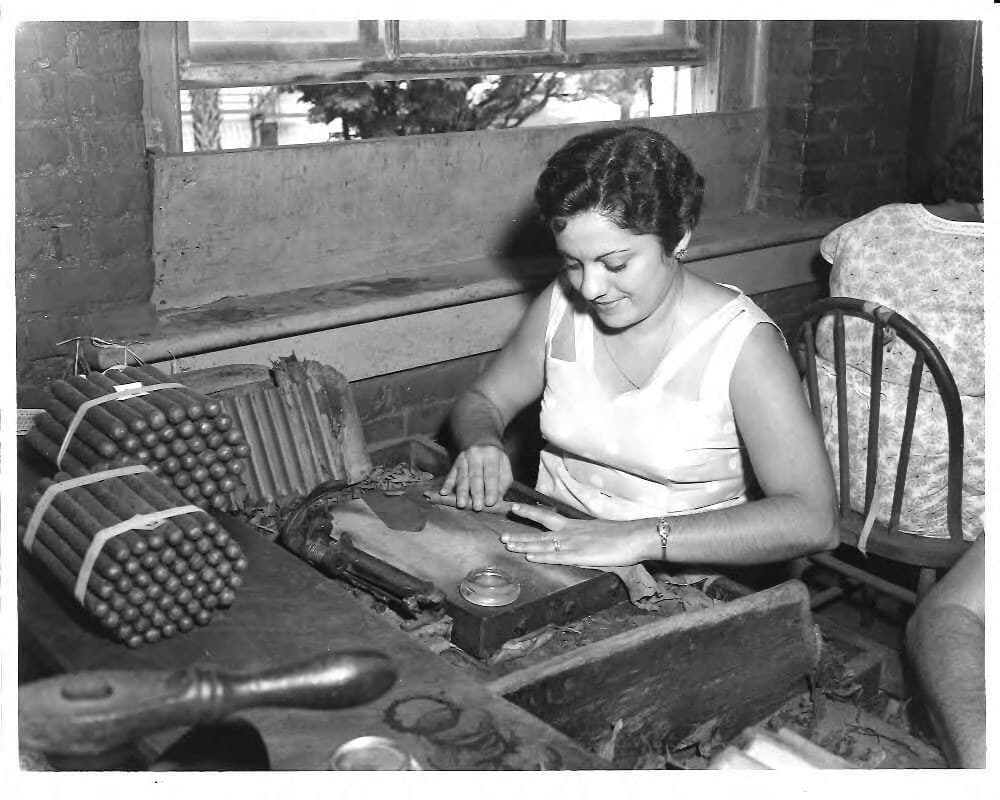
The trade went on without them. Machines took the rollers' work, the cigarette took the customers, the Depression took the rest, and by the early 1950s the factories were mostly dark. Of the more than 200, 25 buildings still stand. One still rolls cigars. El Reloj, the brick factory on 16th Street built in 1910 for a thousand rollers, has belonged to J.C. Newman since 1954, and on March 31, 2021, its 111th birthday, the company put a lector's podium back on the third floor and had guests read to the rollers for a morning. The 11:30 reader was Patrick Manteiga, the lector's grandson. It was a one-day event, and no Tampa factory has a reader on the payroll. In Havana they never stopped, and Partagás has them still.
The lector has a longer afterlife on the stage. Nilo Cruz's Anna in the Tropics, set on an Ybor City factory floor in 1929, has a reader named Juan Julián who reads the rollers Anna Karenina. It opened at the New Theatre in Coral Gables on October 12, 2002, won the Pulitzer Prize for Drama the next spring before anyone in New York had seen it, and reached Broadway that November. The oral histories at the University of South Florida say what the play guesses at. José Vega Díaz, a roller, put it this way in 1980, remembering his Hugo: in every town the school teacher is the light, he lights the candle, and the priests try to blow it out. "That's why they, the church, the owner don't want the reader. The reader lights the candle."
Questions people ask
- What was a lector in a cigar factory?
- A reader hired by the cigar rollers themselves, not by the factory. In Ybor City each roller paid about 25 cents a week, the workers voted on who got the job and on which books he read, and he read from a platform above the benches for close to four hours a day: newspapers in the morning, including the Tampa Tribune translated into Spanish, and a novel in the afternoon, a chapter or two at a time. Don Quixote was the favorite nearly everywhere, followed by Hugo, Zola, Dumas and Pérez Galdós. The custom came from Havana, where Saturnino Martínez arranged the first readings at the El Fígaro factory in 1865.
- Why were the lectors banned in 1931?
- Because of the newspapers, not the novels. The rollers asked their readers for the labor and radical press, and the manufacturers blamed the platform for every strike. In November 1931, after a Communist-led union had signed up half the trade and a march on November 7 ended with seventeen workers in jail, the manufacturers' association tore out the platforms, on November 27 by most accounts, and said the readers spread Communist propaganda. Thousands of rollers walked out. The owners locked the factories, a federal judge enjoined the union, and within two weeks the workers voted to return on the owners' terms: open shop, no union, no readers. Radios took the platforms' place.
- Do any cigar factories still have lectors?
- In Cuba, yes. Havana factories such as Partagás never stopped, and readers still work there. In Tampa, no. Of the more than 200 factories of the 1920s, 25 buildings stand and only one, J.C. Newman's El Reloj on 16th Street, still rolls cigars. For the factory's 111th anniversary on March 31, 2021, the company rebuilt a lector's podium on the third floor and had guests read to the rollers for a morning, among them Patrick Manteiga, publisher of La Gaceta and grandson of the lector Victoriano Manteiga, who founded the paper in 1922. It was a one-day event, and no Tampa factory has a reader on the payroll.