
history · 7 min
What Happened to Sanlando Springs
The Longwood swimming park sold tickets from 1926 to 1970, then became a gated subdivision; the spring behind the clubhouse still runs at the rate the postcards claimed.
By The Editors ·
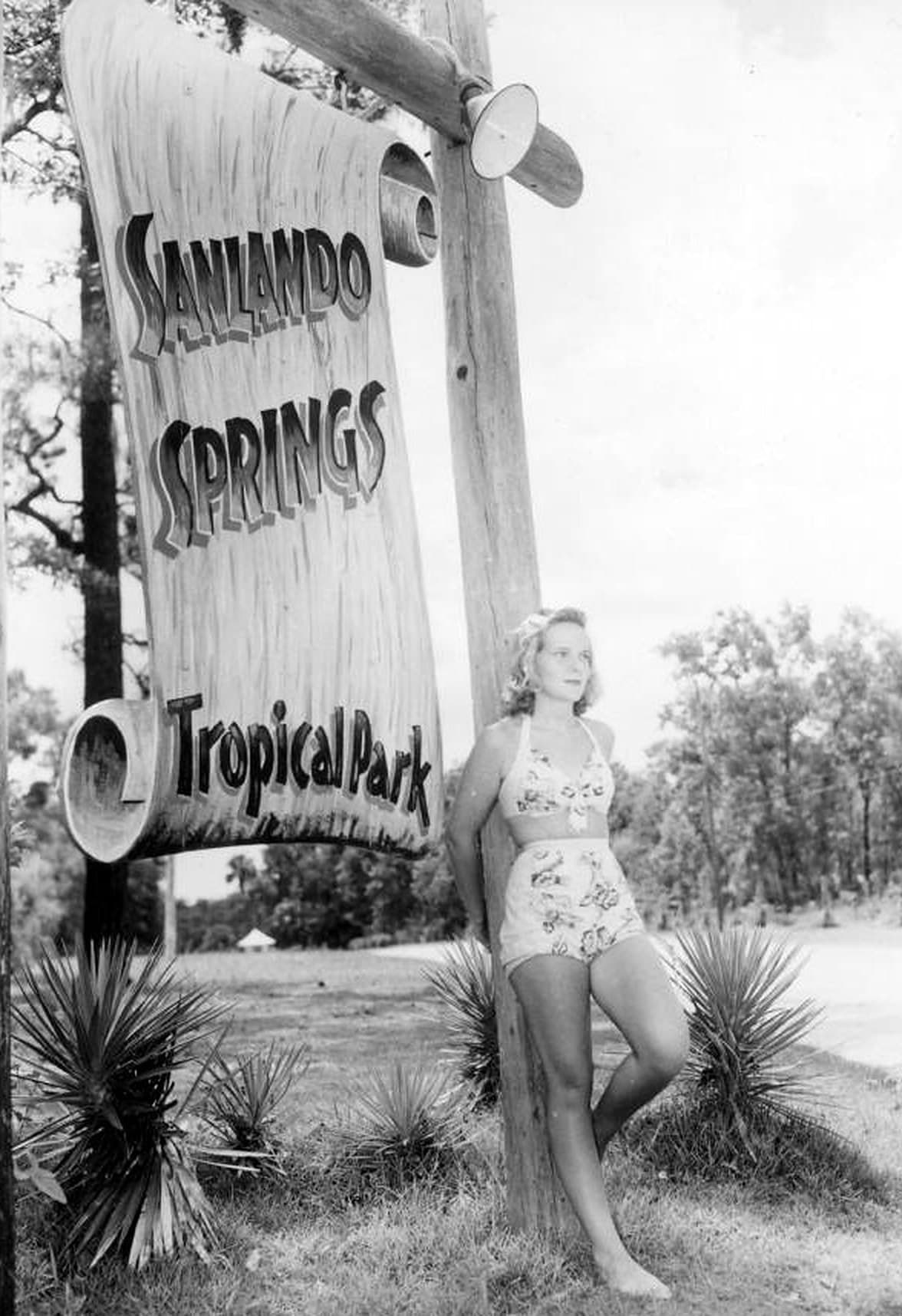
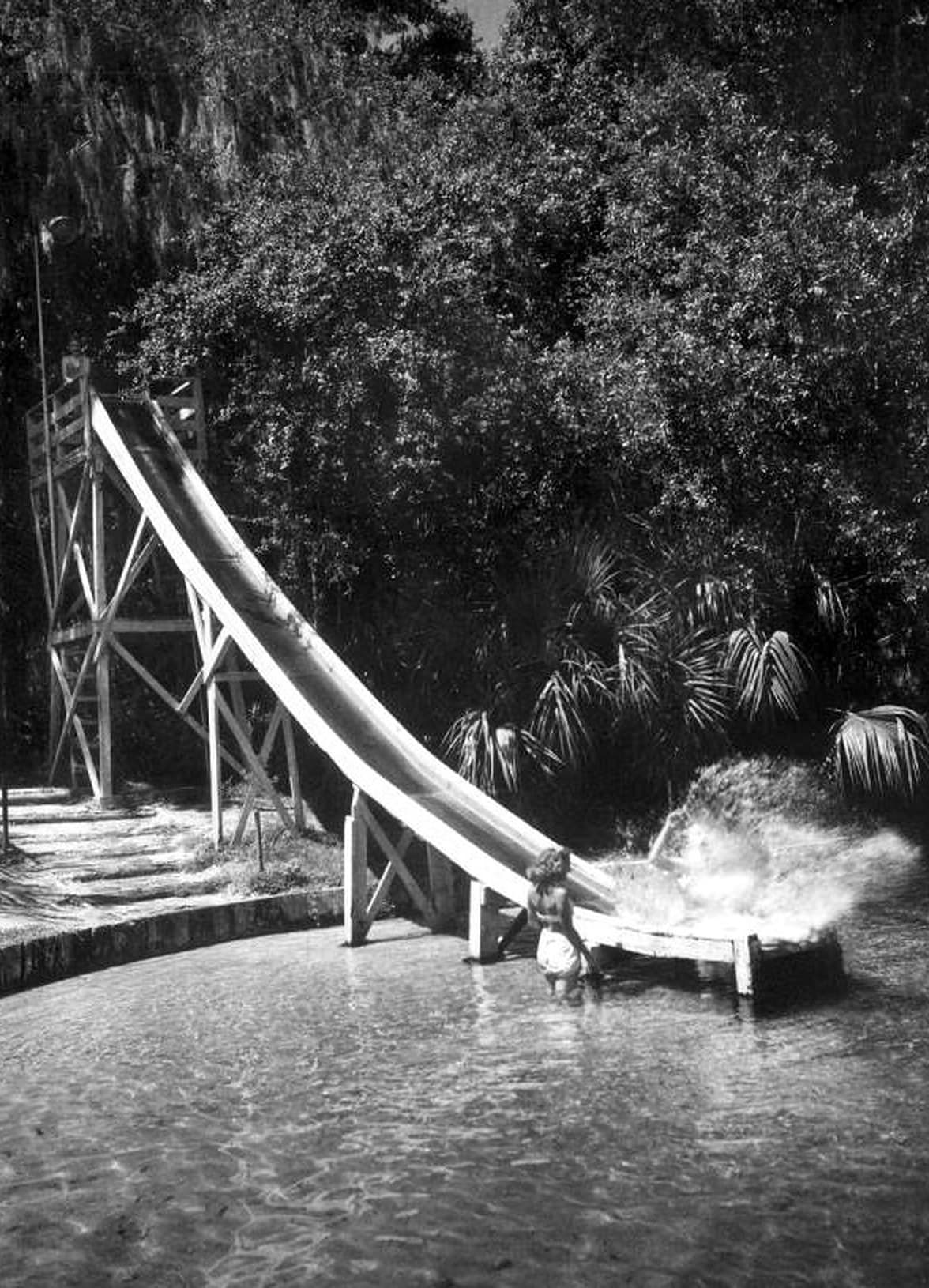
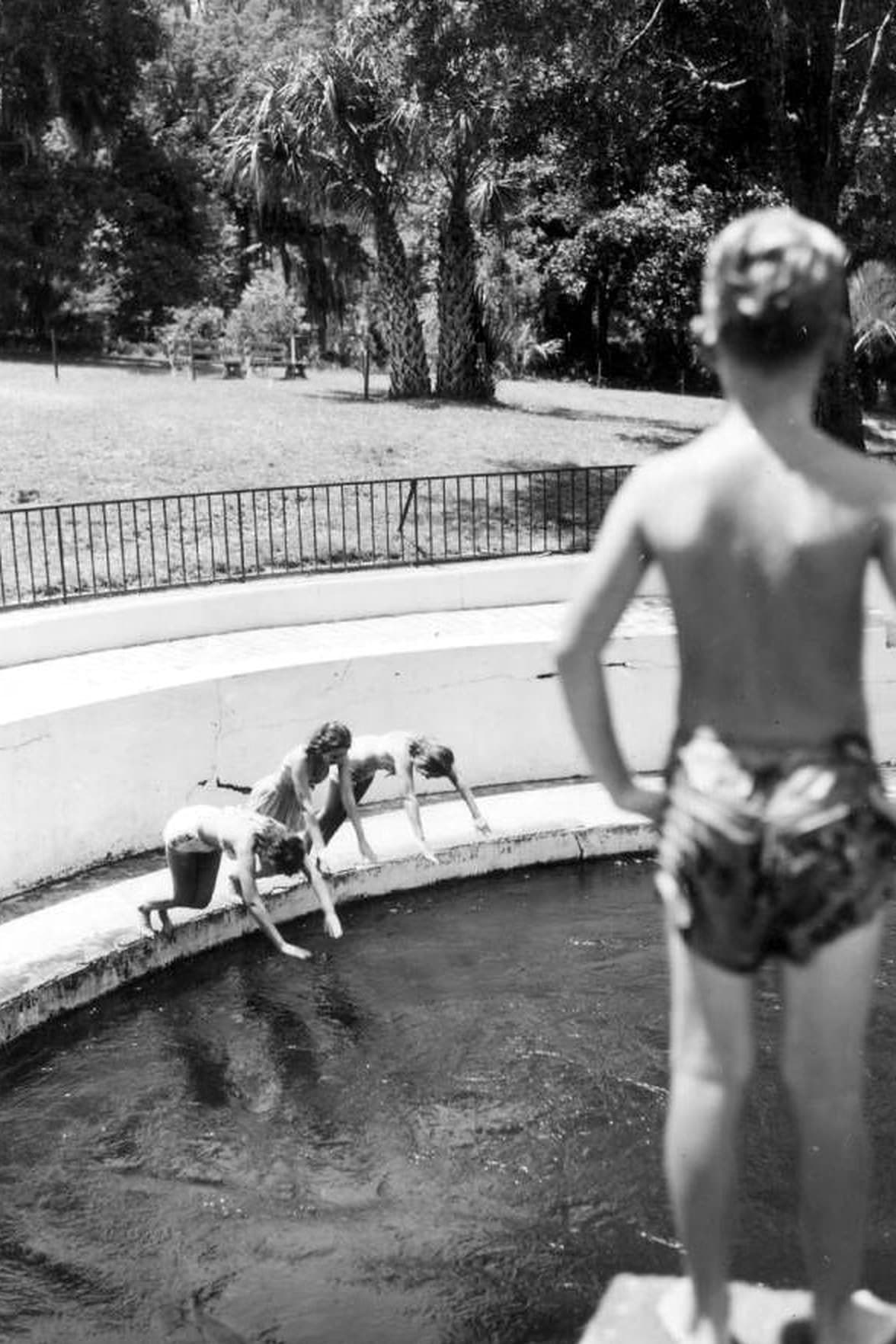
On August 9, 1946, a photographer for the Florida Department of Commerce spent a day at Sanlando Springs Tropical Park, west of Longwood, and brought back the pictures most people now know the place by. A painted scroll at the gate with a loudspeaker bolted to its post. A tall slide dropping into clear water. Diving boards over the boil. Couples on a dance floor under the oaks after dark. The park was twenty years old that summer. It had twenty-four more seasons in it.
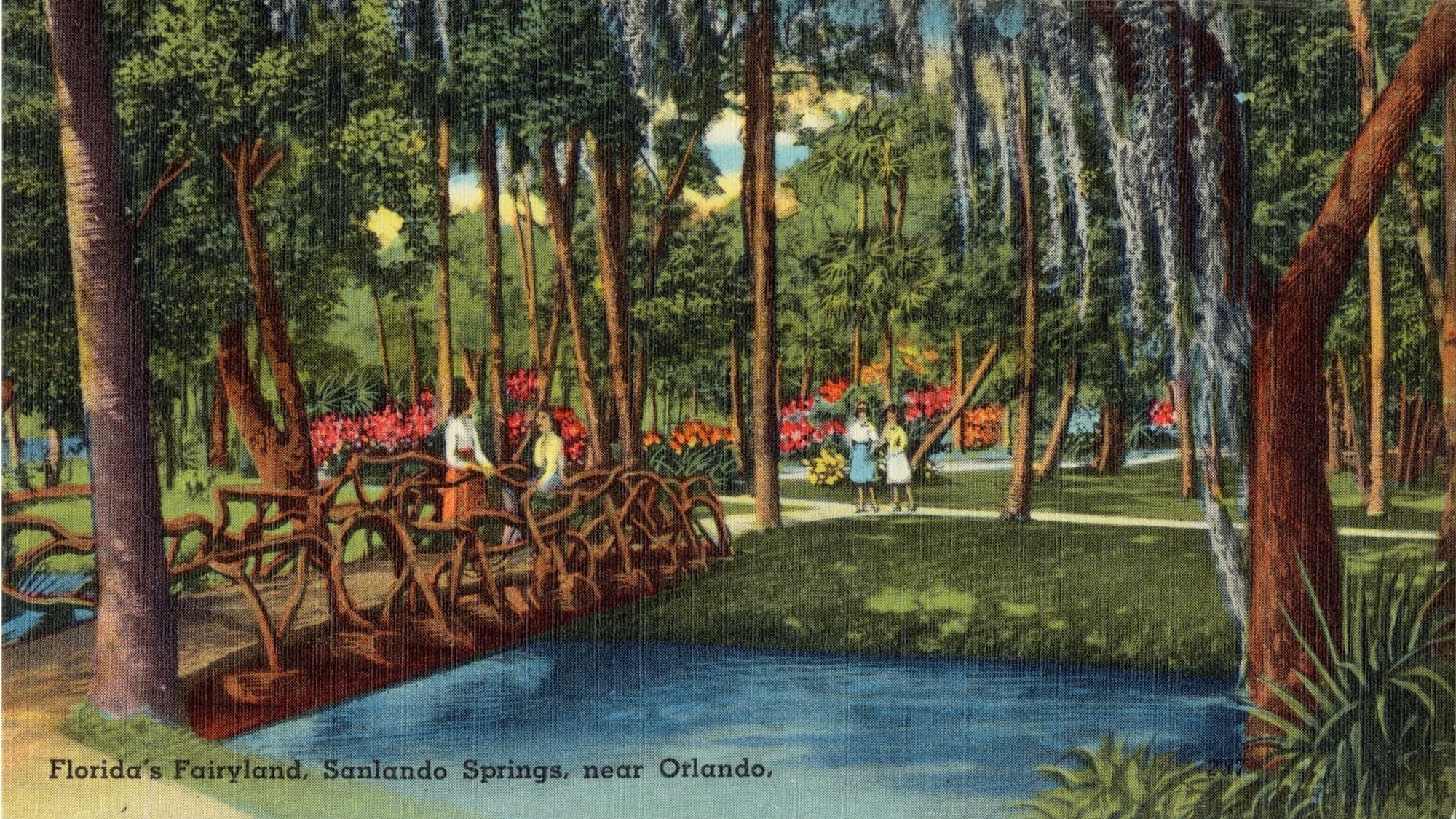
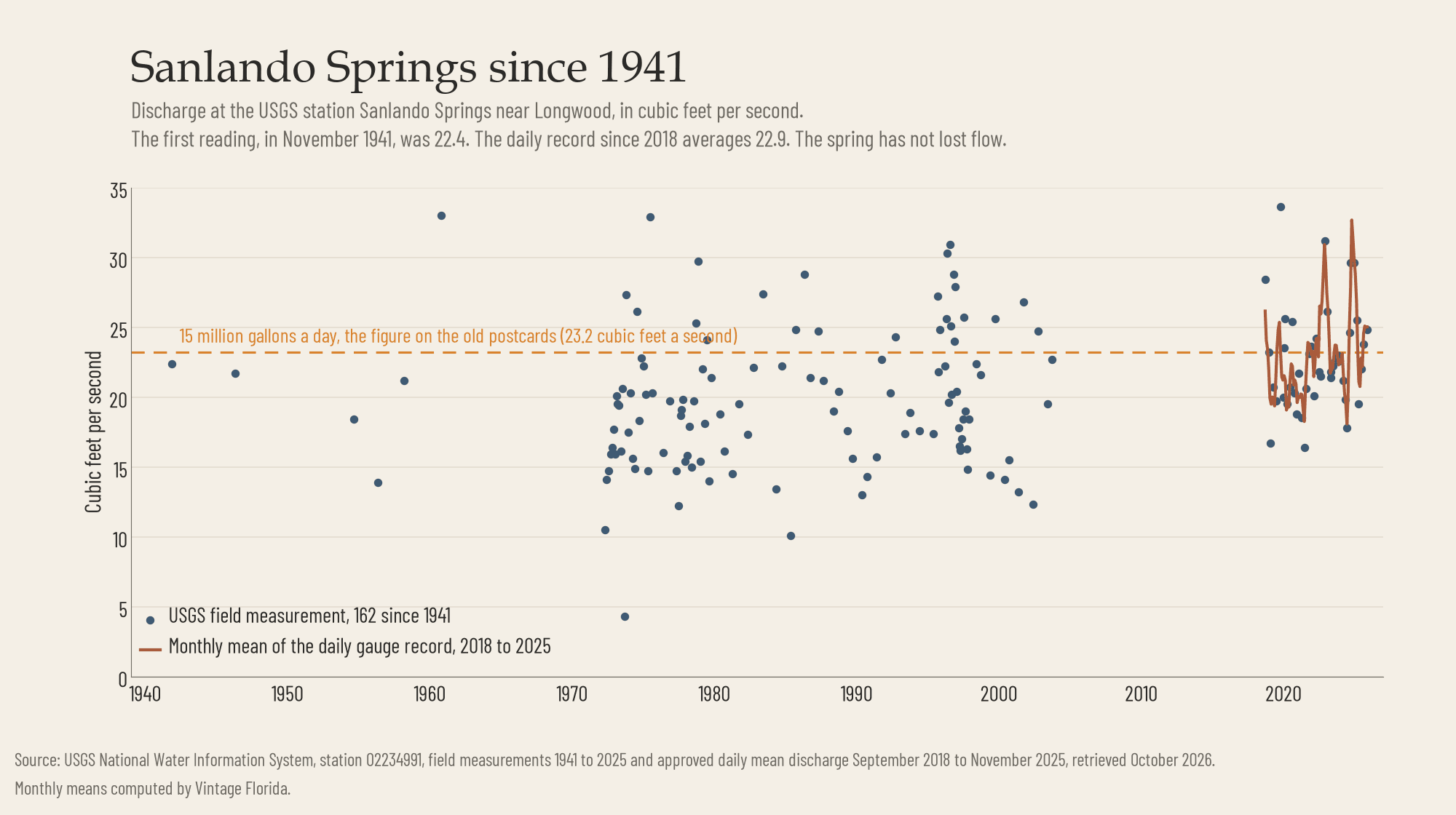
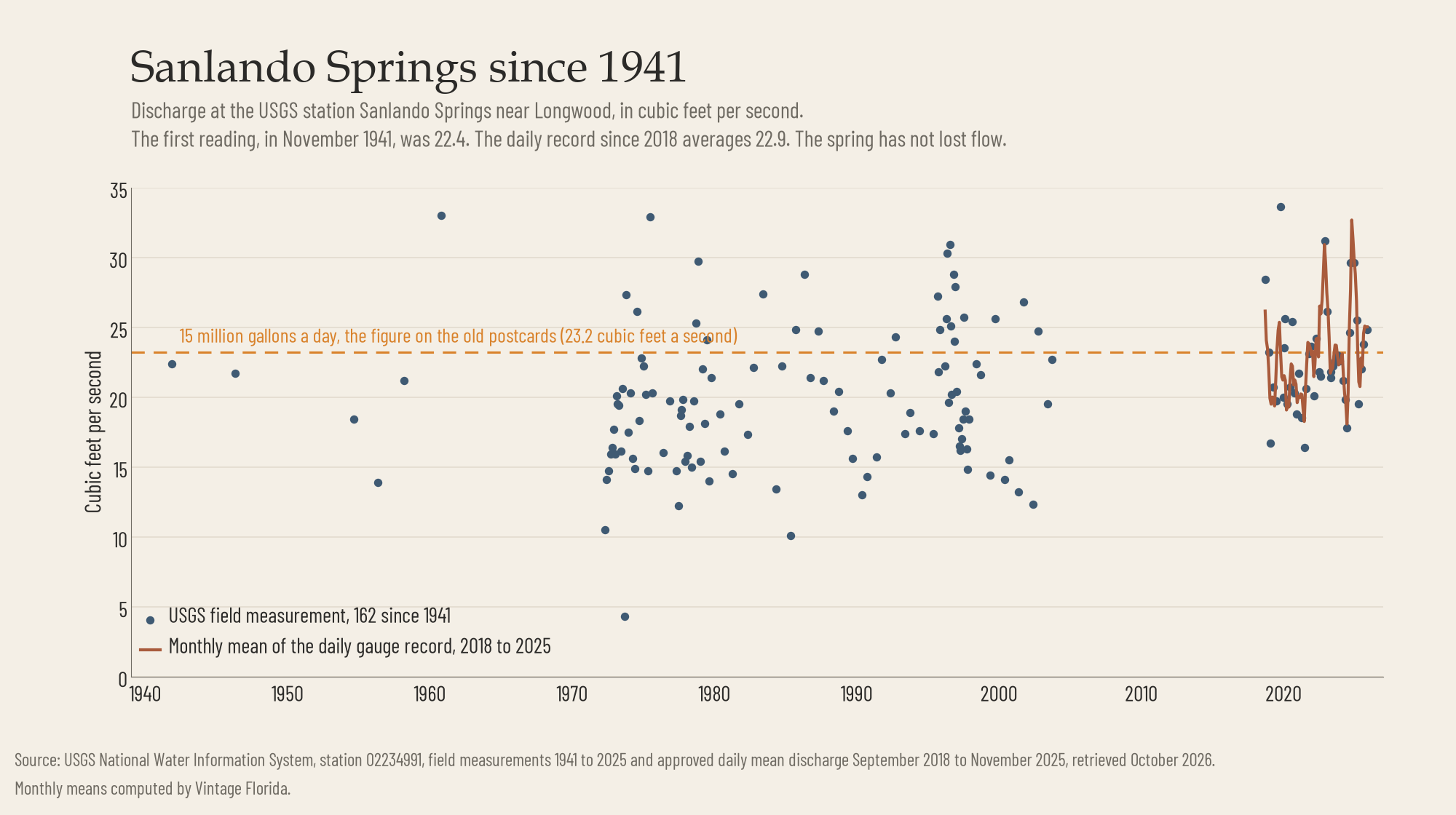
The spring comes up through an oblong cavity under a limestone ledge, about seven feet down, ten feet wide and two or three feet high, at 72 degrees year round. The United States Geological Survey first measured it on November 12, 1941, and got 22.4 cubic feet a second, which is 14.5 million gallons a day. The postcards of the period claimed 15 million. For once the postcards were close.
The Suburb Beautiful
The first name was Hoosier Springs. Ingram Fletcher, a banker from Indianapolis, wintered beside it, named it for his home state, platted a town there in 1885, and in January 1887 sold his 161 acres to a widow from Toronto named Elizabeth Saunders. The Florida Midland Railroad came through that year with a stop within walking distance. The town never filled in. The swimming hole did.
James Franklin Haithcox arrived with the boom. A minor stage actor turned salesman, by the mid 1920s he had a real estate office in Orlando and a turn as mayor of Altamonte Springs. In May 1925 he and his investors formed the Sanlando Springs Corporation with two million dollars, cut the name out of Sanford and Orlando, and sold an estimated 3,000 lots in five months in a subdivision billed as Sanlando, the Suburb Beautiful. According to Jerrell Shofner's history of Altamonte Springs, much of the land came from the Overstreet Investment Company, which mortgaged it to Haithcox in April 1925 for $120,000. The spring was the advertisement.
At the spring Haithcox poured concrete walks and steps, built a dam on the Little Wekiva in April 1926 to raise the pool and keep the tea-colored river out of the clear water, and dug a separate concrete pool that a pump refilled from the spring every day. He called it the first in the area and invited a crowd from Orlando and Altamonte for the opening swim. The same month, ground was broken for a fifty-room hotel. It was never built. Longwood extended Warren Street west to the gate in 1926 along the dead railroad's right of way, which is why State Road 434 through town is still Sanlando Springs Road.
The same month, ground was broken for a fifty-room hotel. It was never built.
The hurricanes of 1926 and 1928 let the air out of the boom before the stock market did. Haithcox lost interest, and the land went back to the man who had financed it. Moses Overstreet held timber and turpentine land along the Wekiva and a seat in the state senate; the big cypress in Longwood is called the Senator because he gave the county the ground around it in 1927. He repossessed the park and decided to make something of it.
Tropical Park
The park reopened in 1935 as Sanlando Springs Tropical Park, with the river rerouted around a new sand beach, shallow pools of water lilies, and about 10,000 azaleas set out between the sand and the water. On the high ground Overstreet laid a terrazzo dance floor and hung the loudspeakers in the branches of a big oak. There were swimming lessons and weekly aquatic shows, and in 1941 the Marchand family put on professional log rolling. In 1944 Overstreet bought Palm Springs, a quarter mile downstream, to add to the park.
The war filled the dance floor. The Longwood Historic Society records large buses bringing servicemen from the bases around Orlando and Sanford to the evening dances, and the Sentinel's historians describe a pavilion that drew young people all through the 1940s. Betty Robinson, born in Orlando in 1923, remembered her mother loading the car in the dog days of July and August, when nobody swam in the lakes. "You had to pay to go to Sanlando: 35 cents," she said in 2016. It is one woman's memory of the price.
J. E. Robinson and his wife bought the park in 1950. The community that occupies the land now credits the Robinsons with the diving platform and the slide, but the slide is in the 1946 photographs and the county's marker puts it in the 1930s; the Robinsons rebuilt it. By the early 1950s admission was about a dollar, paid for with a stamp on the back of the hand that showed purple under a green light at the gate. It was still a dollar on a hot Saturday in the 1960s, and the dollar bought shade, a snack bar, pinball in the clubhouse, a pool with three diving boards, and what the Sentinel called the best waterslide in Central Florida, a high aluminum one.
It Only Took a Buyer
Sanlando was never public land. Haithcox let people walk the grounds free and charged for the bathhouse; later owners charged at the gate. Closing it took no vote. In 1970 the owners announced that the park was opening to the public for the last time. Earl Downs and LNC Land Sales had bought Sanlando, Palm and Shepherds springs, and Shepherds was renamed Starbuck. Construction of The Springs began in 1971 behind a gate on State Road 434, a mile west of Interstate 4. A 1999 flyer from the community office counted 400 acres and 880 living units; the association's website says 878 homes.
The spring sits behind the clubhouse. The board took down the diving platform and left a floating dock forty feet out. Residents and their guests swim, and nobody else does, with one exception that lasted more than twenty years: the Orlando Philharmonic's spring pops concert on the lawn, Queen one year and ABBA another, whose tickets were the public's way in. The 2024 concert was postponed over costs and a change of leadership, and in October 2024 the orchestra announced it had outgrown the venue and would move to Cranes Roost Park in Altamonte Springs on April 4 and 5, 2025.
The Water
The spring is doing fine. The USGS has measured it 162 times since 1941, and the mean of those readings is 20.7 cubic feet a second; in 1994 the St. Johns River Water Management District put the long-term average at 20.2. In September 2018 the USGS installed a continuous gauge on the run, and across 1,964 days of approved record through November 2025 the daily mean is 22.9 cubic feet a second, or 14.8 million gallons a day. The 1941 reading, the postcard's claim and the recent record sit within a few percent of one another. The USGS has posted a notice that the gauge was to be discontinued on October 1, 2025.
The river the spring feeds is in worse shape. The Little Wekiva starts at Lake Lawne northwest of downtown Orlando and runs fifteen miles north to the Wekiva, draining about 42 square miles of roofs and pavement. Above State Road 434 its flow is stormwater and the treated effluent of the Altamonte Springs wastewater plant, about four million gallons a day around 1990 and still a wet-weather discharge capped at 30 percent of the plant's flow under the Wekiva Parkway and Protection Act. Then Sanlando, Palm and Starbuck pour in about forty cubic feet a second of clean 72-degree water and dilute it. A 2011 federal assessment noted declining flow at the three springs from the early 1970s to 2003 and blamed pavement, pumping and rain. In 2019 and 2020 sand buried the channel at Longwood while Interstate 4 was being rebuilt four hundred feet away.
The scroll sign from the 1946 photograph is gone, and so is the loudspeaker on its post. The sand beach is still on the west side of the pond, the retaining wall still holds the oval Haithcox dammed in 1926, and the water still leaves through two weirs at the ends of the wall and reaches the Little Wekiva a few hundred feet to the west.
Questions people ask
- Can the public swim at Sanlando Springs?
- No. Since 1970 the spring has been inside The Springs, a gated community of about 880 homes on 400 acres west of Longwood, with a staffed gate on State Road 434 a mile west of Interstate 4. Residents and their guests swim in the dammed pond behind the clubhouse; the board removed the diving platform and left a floating dock about forty feet out. For more than twenty years the Orlando Philharmonic's spring concert on the lawn was the one public ticket in, and that concert moved to Cranes Roost Park in Altamonte Springs in April 2025.
- Why did Sanlando Springs close?
- It was never public land. Frank Haithcox bought the spring during the 1920s boom and dammed the Little Wekiva in April 1926 to make the pool. Moses Overstreet repossessed it after the bust and reopened it in 1935 as Sanlando Springs Tropical Park, and J. E. Robinson ran it from 1950. In 1970 the owners announced the last public season and sold Sanlando, Palm and Shepherds springs to Earl Downs and LNC Land Sales, who began building The Springs subdivision in 1971. No government ever owned the park, so closing it took only a buyer.
- Is Sanlando Springs still flowing?
- Yes, at about the rate it always has. The USGS first measured the spring on November 12, 1941, at 22.4 cubic feet a second, and a continuous gauge installed in September 2018 averaged 22.9 cubic feet a second, about 14.8 million gallons a day, through November 2025. Old postcards claimed 15 million gallons a day. The water is 72 degrees and rises from a limestone cavity about seven feet down. The St. Johns River Water Management District put the long-term average at 20.2 cubic feet a second in 1994. Below the spring, that clean water dilutes the Little Wekiva River, which carries stormwater and treated wastewater from Altamonte Springs.