
news · 6 min
Apalachicola's Oyster Reefs, Slowly Returning
After a five year closure, the wild oyster is cautiously back on Apalachicola Bay.
By The Editors ·
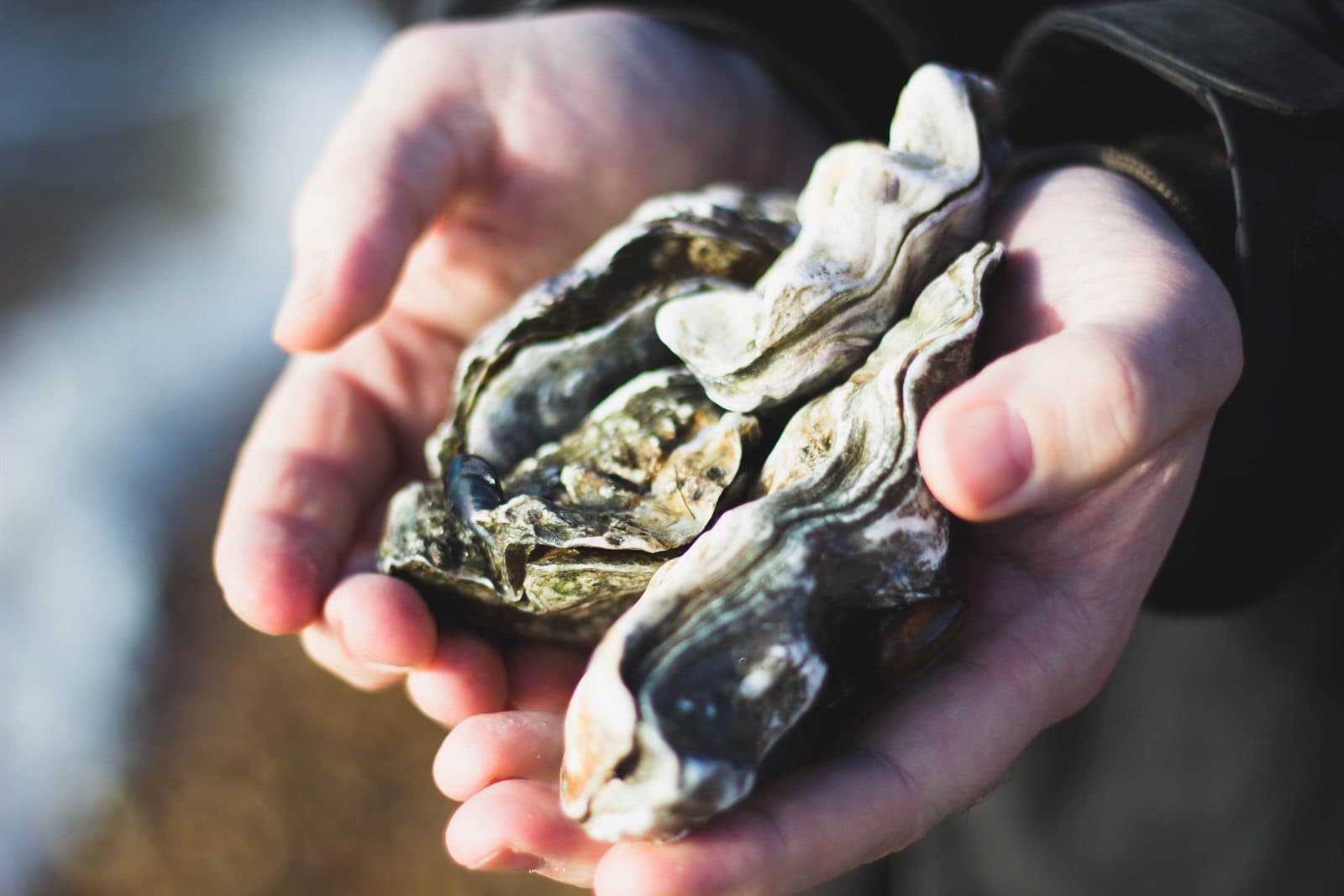
An oysterman works standing up, leaning over the side of a small boat with a pair of wooden handled tongs that open and close like long scissors. He feels along the bottom, closes the rake on a clump of oysters, and swings it up to cull on a board laid across the gunwales, keeping the legal ones and knocking the rest back. Around Apalachicola, on the bend of Florida's Gulf coast, families made a living that way for more than a century. At its height the bay produced close to nine of every ten oysters harvested in Florida, and roughly a tenth of all the oysters eaten in the country.
The reason was fresh water. The Apalachicola River drains a wide basin reaching up into Georgia and Alabama, and where it meets the Gulf it mixes salt and fresh into the brackish balance oysters need. Too salty and their predators and diseases move in. The river held the bay in that productive middle for generations, and the oyster built the town around it, the packing houses, the boats, the raw bars, the festivals.
Apalachicola oysters carried a name. Raw bars and kitchens up the coast asked for them by it, and the bay was one of the last places in the country still worked the old way, by hand, with tongs, from small boats, rather than scraped up by machine dredge. That tradition was part of what made the place, and part of why the collapse cut so deep. When the reefs went, a way of working that had passed down for generations went quiet with them.
The Collapse
Around 2012 and 2013 the fishery fell apart. The causes stacked on one another. Far upstream a growing Atlanta and the farms of the basin were drinking more of the river, and a hard drought cut the flow further, so less fresh water reached the bay and the salinity climbed. After the 2010 Deepwater Horizon spill out in the Gulf, with everyone fearing oil would shut the bay down, crews had also worked the reefs especially hard, taking oysters while they still could. Whatever the exact mix, the reefs thinned to where they could no longer rebuild themselves. An industry once worth better than $130 million a year to the region nearly vanished.
Florida and Georgia took the fight to court. The state sued its neighbor over how much water Georgia drew from the shared rivers, arguing the bay was dying for lack of flow. The case ran all the way to the United States Supreme Court, which ruled against Florida in 2021. The river, and the bay below it, would get no relief from the law.
Five Years Closed
In 2020 the state took the hardest step on its own. With the reefs still failing, Florida shut the bay to all oyster harvesting and then set a five year closure to begin in 2021. For a town built on the oyster it was a brutal call, putting tongers and shuckers and dealers out of the work their families had always done. The alternative was to watch the last reefs go. The closure bought time, and the state spent it rebuilding the bottom.
Oysters need something hard to grow on, usually the old shell of the oysters before them, and that base was much of what the reefs had lost. So crews went out and put it back, barging out limestone and shell and laying down fresh cultch by the acre for new oysters to set on. Since 2019 more than $38 million has gone into the work, guided by a long study out of Florida State called the Apalachicola Bay System Initiative. By the spring of 2025 about 38 acres of named reefs, places like Cat Point and Easthole and Peanut Ridge, had been fully rebuilt, a start against a stated goal of 2,000 acres by 2032.
At its height the bay produced about a tenth of every oyster eaten in the country.
A Careful Return
It was enough for a first, cautious opening. On January 1, 2026, the bay reopened for the first time since 2020, a short season running through the end of February on the handful of reefs that had finally met the minimum count, 400 bags of oysters to the acre. Harvesters went back out under tight limits, commercial and recreational alike, on water that had been off limits for five years.
Whether it holds depends on things larger than the reefs. The oysters will only keep setting if enough fresh water keeps coming down the river, and that supply is still divided among three states and a shifting climate. A reef can be rebuilt by hand, acre by acre. The flow that feeds it cannot.
No one in Apalachicola is calling it a recovery. A two month season on four reefs is not the bay that fed the country. But for the first time in years there were boats on the reefs again and tongs coming up full, and in a place that has always measured itself by the oyster, that counted for a great deal.
Questions people ask
- Why was Apalachicola Bay closed to oyster harvesting?
- Because the reefs were failing. In 2020, with the wild reefs still collapsing, Florida shut the bay to all oyster harvesting and then set a five year closure to begin in 2021. For a town built on the oyster it put tongers, shuckers and dealers out of the work their families had always done, but the alternative was to watch the last reefs go. The closure bought time, and the state spent it rebuilding the bottom.
- Is Apalachicola Bay open for oysters now?
- Partly. On January 1, 2026, the bay reopened for the first time since 2020, for a short season running through the end of February on the handful of reefs that had met the minimum count of 400 bags of oysters to the acre. Harvesters went back out under tight limits, commercial and recreational alike.